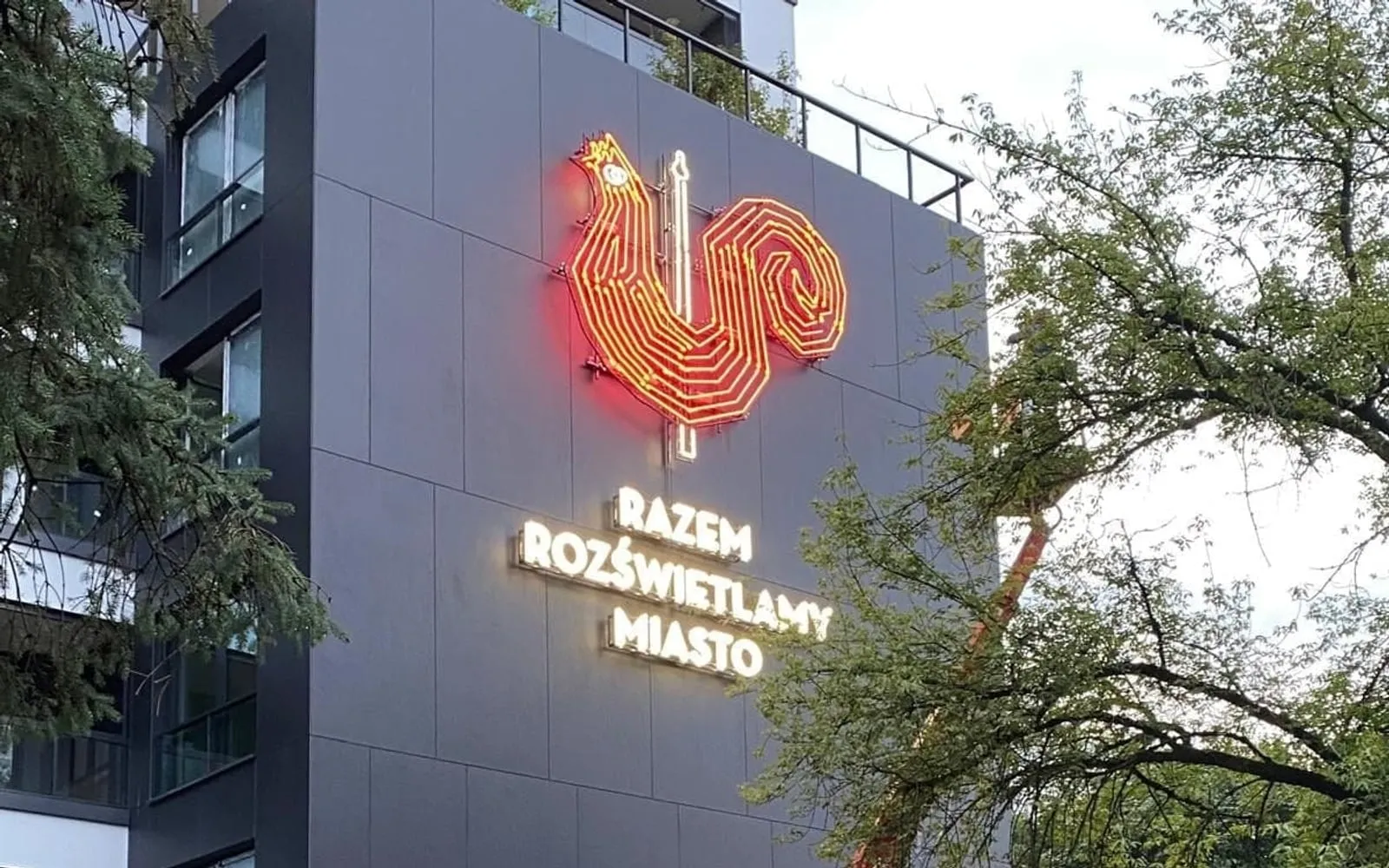
Servicing and maintaining illuminated signage before winter
A sign with half its letters dark does more harm than no sign. What to check before the season, when to call at once, and where servicing starts.
Illuminated advertising is an electrical device hanging over the street
It is easy to treat an illuminated sign as part of the facade: it went up and it is meant to stay up. Yet it is a structure with a power supply, light sources and fixings that works all year in rain, frost and sun, and glows for a dozen or more hours after dark. Like any device of that kind it needs an inspection — ideally before the season in which it matters most.
We service, repair and maintain existing illuminated advertising so it glows at full brightness for many years.
A well-made sign does not need much attention, but it needs it regularly. The difference between signage that glows evenly after ten years and signage fit for replacement after three usually lies not in the technology, but in whether someone looked at it once a year.
This article is a checklist for the owner: what to look at yourself, which symptoms mean a fault and which a hazard, and how servicing works when someone else made the sign. We give no prices or lead times here — every job is quoted after an inspection.
What breaks most often
In LED-lit letters and lightboxes it is usually single segments that go dark — one letter dimmer, one part of the face unlit. The cause is often a power supply, a cable, or moisture that got into the housing. In glass neon the problem is a cracked tube segment that goes dark entirely, or a power supply after which the neon does not start despite sound glass.
A separate group is mechanics: loose fixings, corroded brackets, a housing with a cracked seal letting water in. These faults are seen less often, because the sign still glows — until it stops, or starts to be a hazard.
What most faults have in common is that they build up slowly: one dark segment does not hurt until half the name has gone out. That is why an inspection is best done while the sign is still glowing, not after the first winter without light.
Pre-winter inspection — what to check yourself
Some things can be judged without a lift, standing under the sign in the evening and in the morning. The list below is enough to know whether to call for service.
- —Do all letters and segments glow at the same brightness — after dark, from across the street?
- —Does the sign flicker, drop out for a moment or start with a delay?
- —Are there streaks, condensation or water marks on the lower edge of the lightbox?
- —Does the housing have any cracks, and is the face lifting at the corners?
- —Does anything vibrate, knock or move against the wall in wind?
- —Do the power cables show any visible damage to the insulation?
Symptoms you should not wait on
Some faults are a signal to switch the sign off and call the same day: sparking, a burning smell, a housing warm where it should not be, a cable with exposed cores, a loose element that shifts in the wind. These are not matters to postpone until spring — they concern the safety of people beneath the sign.
With such symptoms do not attempt a repair yourself from a ladder. Illuminated advertising is connected to the mains and hangs at height — repair requires certification and equipment.
If the sign hangs above the entrance, with such symptoms it is also worth cordoning off the area beneath it until the service arrives.
Where servicing starts
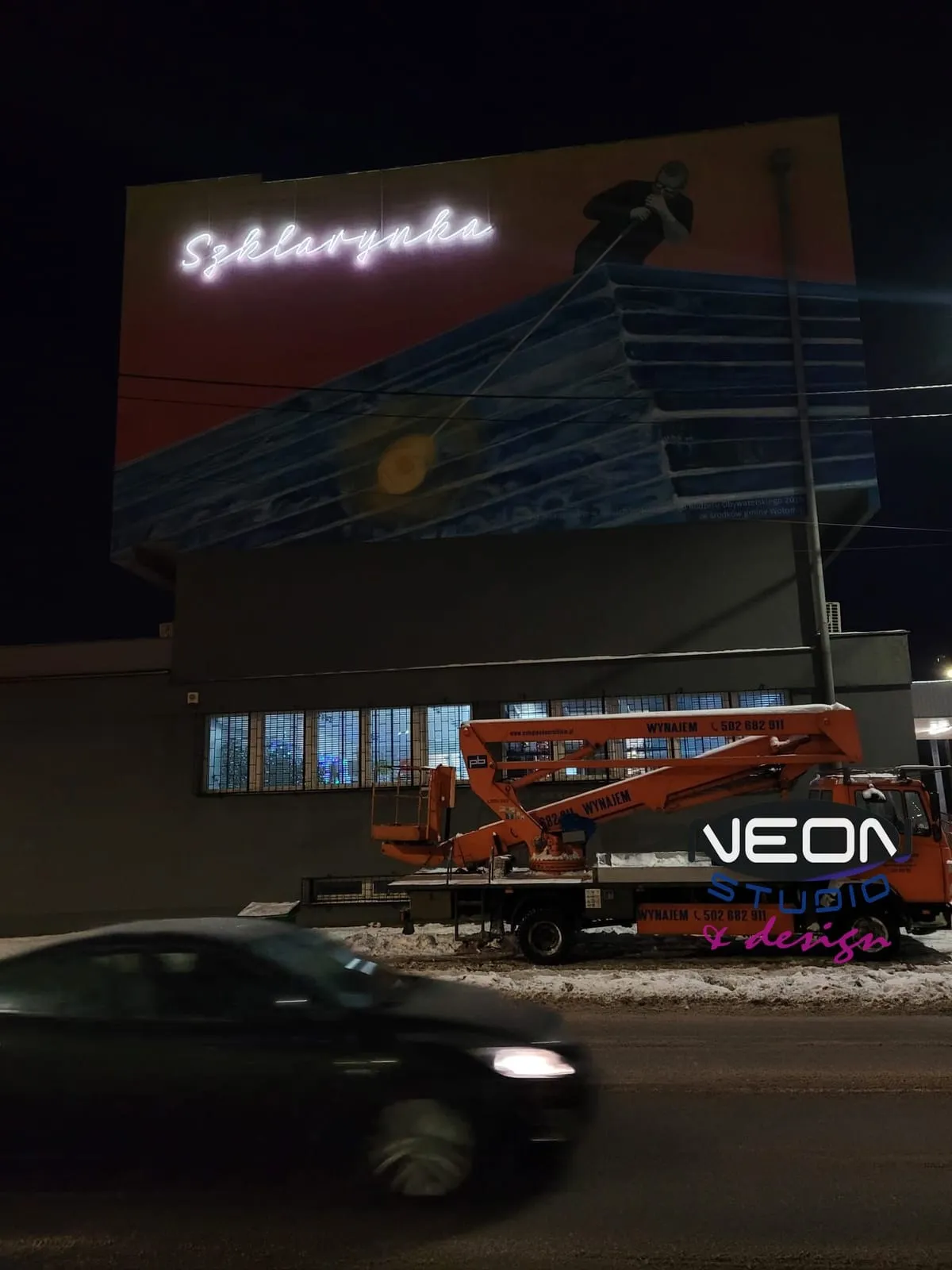
Servicing starts with an inspection — on site or from photographs. Only then is it clear what needs repair, what needs replacing and what equipment is needed to reach the sign. So we ask for photos and a short description of the symptom, and quote after seeing it.
One note on a sign someone else made: it is not always possible to recreate an element one to one, because we do not know the original design. In that case we propose a solution that restores the glow and does not stand out from the rest of the sign.
Already have a project in mind?
Get a free quoteGlass neon, LED, lightbox — each is maintained differently
Three technologies age at different rates and in different places. The table shows what to watch for in each.
| Technology | What wears | Typical repair | Prevention |
|---|---|---|---|
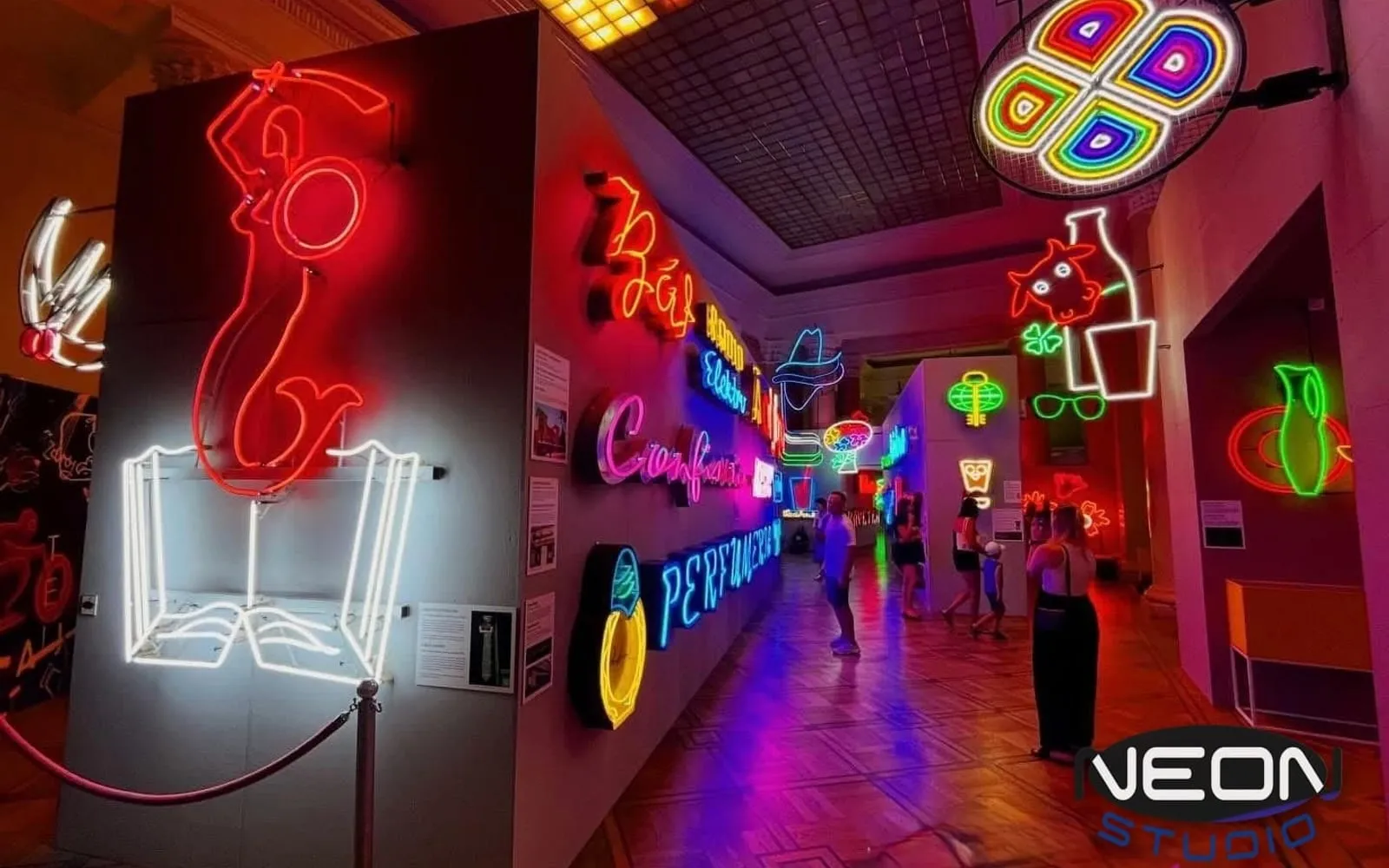
| Glass neon | Tube segments, electrodes, power supply | New segment bent to the original pattern, power supply replaced | Secure fixings, protection from impact |
| LED letters and lightboxes | LED segments, drivers, seals | Module or driver replaced, new seal | Housing check after winter and after summer |
| LED neon (interiors) | Light strip, driver | Segment or whole strip replaced | Never use outdoors |
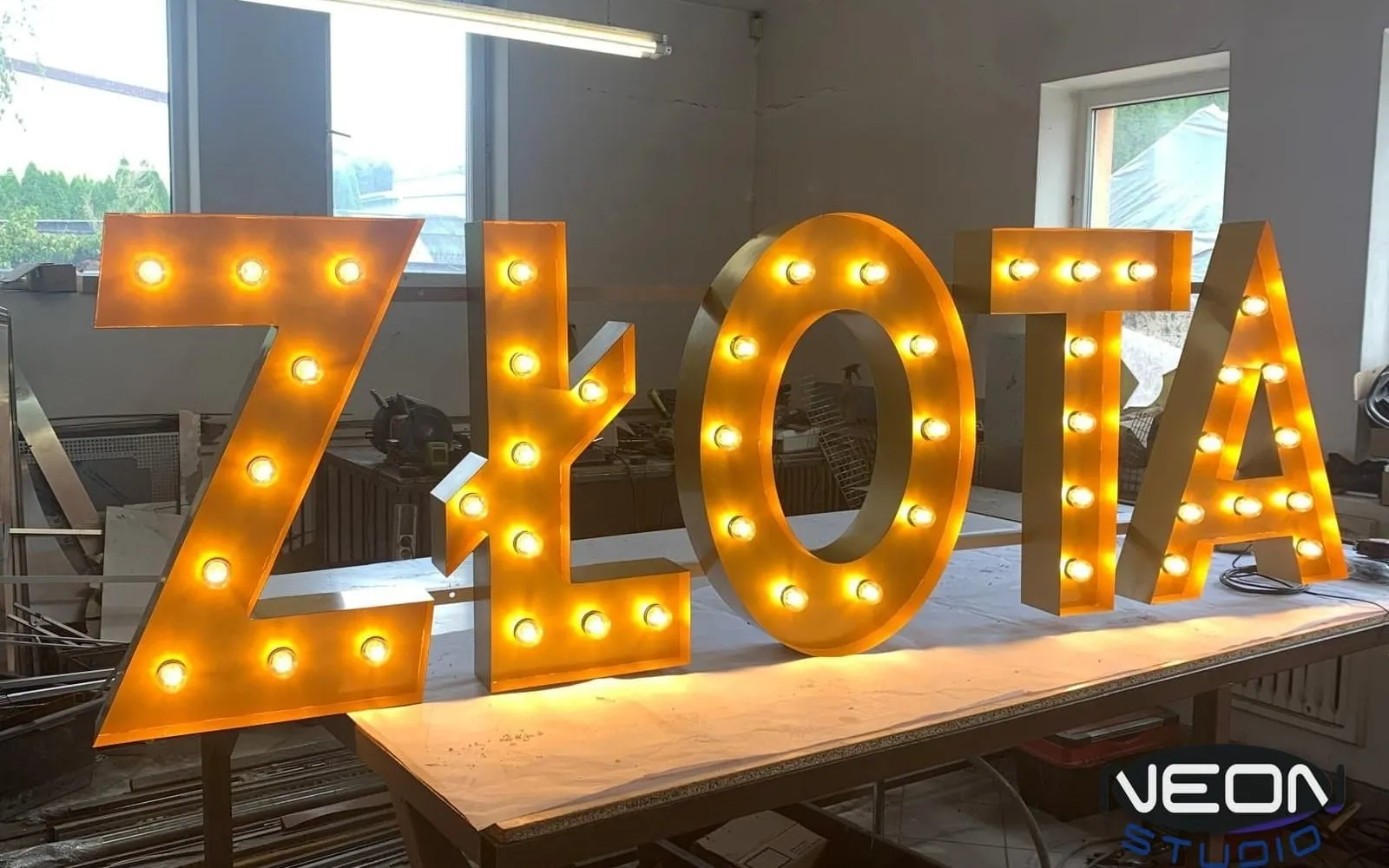
| Bulb letters | Light sources, sockets | Single points replaced | Face access without dismantling |
Removing an old sign — and what comes next
Servicing is often also the end of a sign's life: a sign left by the previous tenant, advertising beyond saving, or signage changed after a rebrand. We undertake the removal of previous advertising, including disconnection from the installation.
If a new sign is to hang in place of the old one, we do both in one visit — from removing the old sign to switching on the new one. That saves one lift hire and one pavement closure.
A dismantled glass neon, if worth keeping, can go to restoration instead of scrap.
Safety: height, electricity, people below
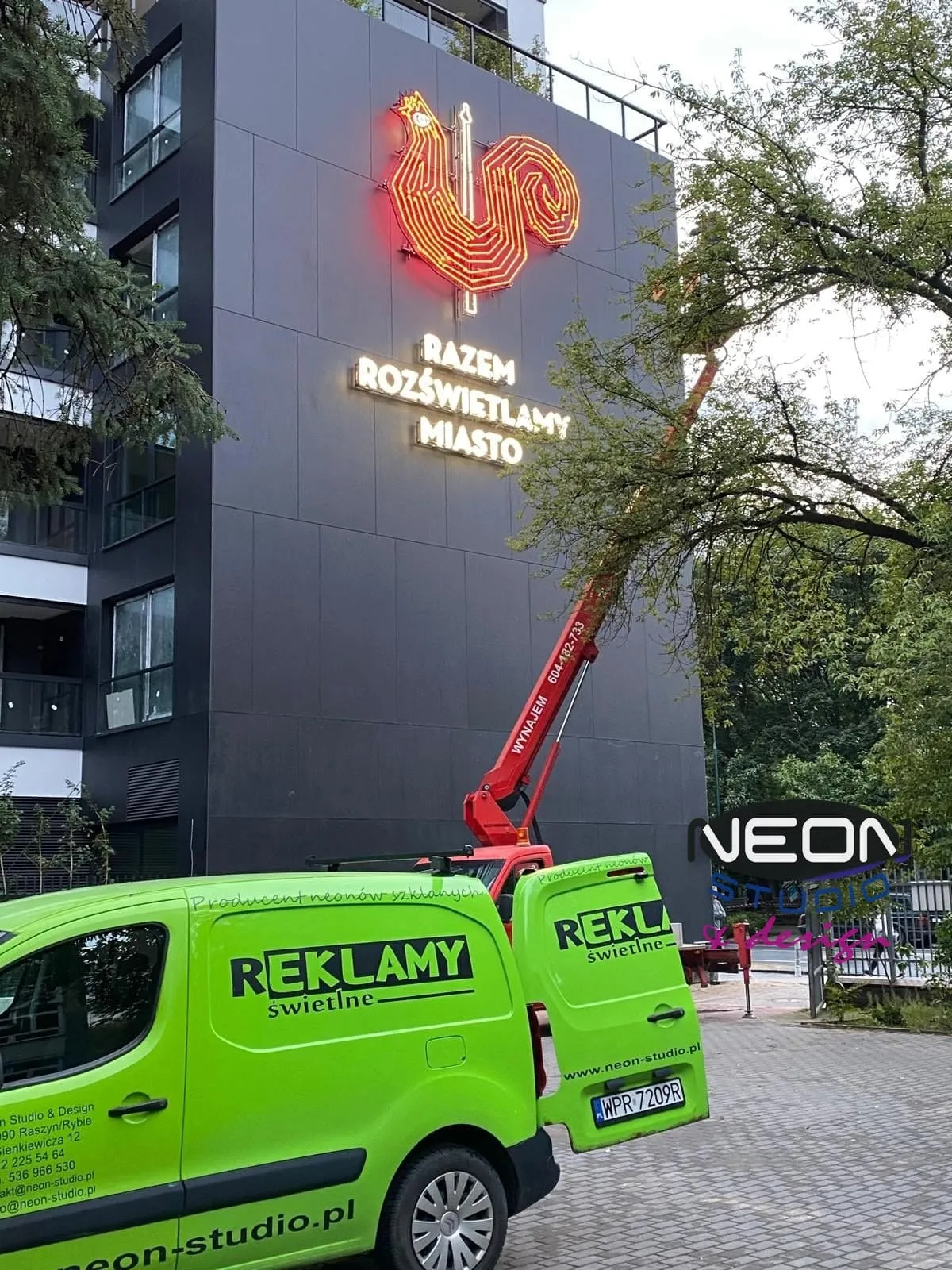
Servicing illuminated advertising combines two kinds of risk: work at height and work on an electrical installation, above a pavement with people walking on it. We carry out installations and repairs ourselves, with certificates for work at heights and full safety procedures. We also make the connections to the electrical installation.
That is why servicing a sign should not be a job for a venue employee with a ladder, even if the fault seems minor.
Regularity: once a year, before the season
There is no single right inspection frequency — it depends on the technology, exposure to weather and the age of the sign. A sensible starting point is one inspection a year, ideally at the turn of summer and autumn, before the days shorten and the sign starts glowing a dozen or more hours a day.
Regular servicing and maintenance cost a fraction of a mid-season failure, and let you plan replacements instead of reacting to a dark sign in December.
During an inspection we check what cannot be seen from the pavement: the state of the seals, fixings and wiring inside the housing, and with glass neon also how firmly the tubes sit in their holders. The inspection ends with a short list: what is sound, what is worth replacing now, and what can be planned for later.
During an inspection we also do the small jobs — cleaning the face, tightening fixings, checking seals — which together extend the life of the sign.
What to prepare for a service request
A service quote is free and carries no obligation. The more precisely you describe the fault, the sooner we arrive with the right parts.
- —A photo of the sign by day and after dark — it shows which elements are not lit.
- —A short description of the symptom: dark segment, flicker, no start, water in the housing, a loose or wobbling element.
- —Where it hangs and at what height — this decides the equipment.
- —Who made the sign and when, if you know.
- —Whether you are planning a change of signage at the same time — then we combine removal with the new installation.
Frequently asked questions
- How does a service request start?
- With photos and a short description of the symptom: a dark segment, flicker, no start, water in the housing. On that basis we arrange an inspection — on site or remotely — and only then give the scope of repair and a quote.
- How often should a sign be inspected?
- A sensible starting point is once a year, at the turn of summer and autumn — before the season in which the sign glows longest. The frequency depends on the technology, the age of the sign and its exposure to weather.
- What to do if a sign sparks or smells of burning?
- Switch off the power and call the same day. These are safety issues, not to be postponed. Do not attempt a repair yourself — illuminated advertising is connected to the mains and hangs at height.
- Do you repair a glass neon with one dark segment?
- Yes. We remake the cracked segment, bending the glass by hand to the original shape, and fill it with noble gas. If the glass is intact and the neon does not start, the cause is usually the power supply or worn electrodes — we then replace the supply or refill the segment.
- Do you take down old signs?
- Yes. We undertake the removal of previous advertising including disconnection from the installation. If new signage is to go in its place, we do both stages in one visit — from removing the old sign to switching on the new one.
- Does servicing require a lift?
- It depends on the mounting height. We carry out work at height ourselves, with certificates and equipment. So in your request it helps to say where and at what height the sign hangs — we then choose the equipment before setting out.