Installing an illuminated sign — what it takes
From surveying the facade to the first switch-on: how a sign, light box or neon is installed, when scaffolding is needed and what to agree before the date.
Installation is half the effect, not an add-on
The best-made sign loses half its value if it hangs crooked, stands off the wall or has a cable running down the facade. Customers judge a sign from the street — they do not see the work behind the bent tube or the light box, but they see every unevenness and every stray cable.
So we treat installing an illuminated sign as the last stage of production, not an add-on. We install signage our clients order — usually on building facades and in interiors: large-format signs, neons and light boxes — handling logistics, installation and electrical connection, from removing the old sign to switching on the new one.
The survey — facade, ground, power
Installation starts before the crew arrives — with a look at the site, in person or from photographs. We check three things. The facade: what it is made of, and whether insulation, cladding or cornices affect how the sign is hung. What lies beneath the sign — a pavement, an entrance, steps — because that decides what we work from. And power: where the cable can run and where the power supply goes.
We gather this before production, not on installation day. If there is insulation behind the sign or power must come from the far end of the premises, we allow for it in the structure and fixings — so the day brings no surprises that move the date.
What we work from — ladder, scaffolding, lift
We match the equipment to the site, not the other way round. Indoors, under a canopy or just above an entrance a ladder is often enough — that is how we installed the neons in the Nocny Market food zone. Above a shop window, where two people work on one element, scaffolding gives a stable platform for holding a light box or projecting sign while tightening the fixings — that is how we installed the projecting sign for Fuego.
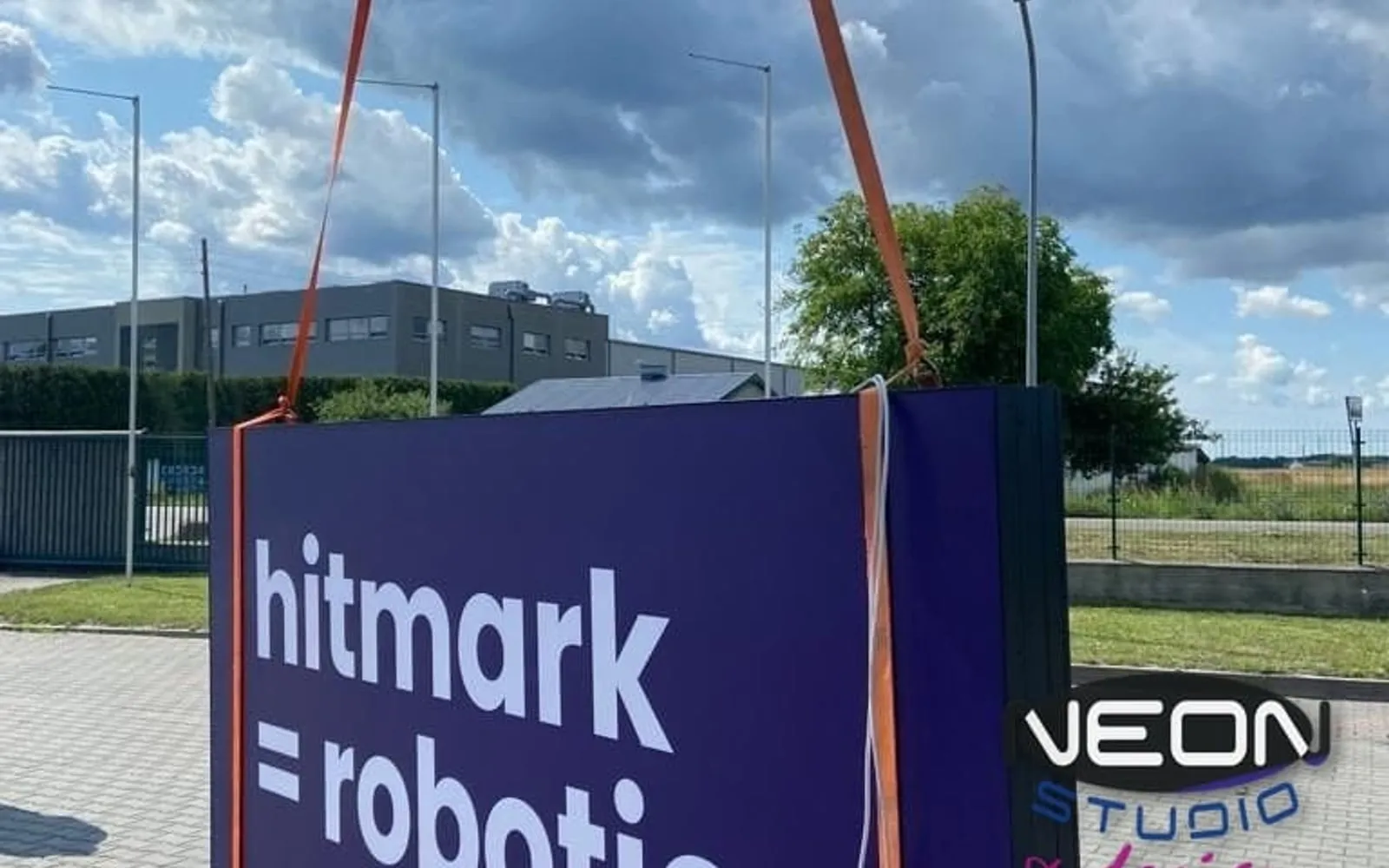
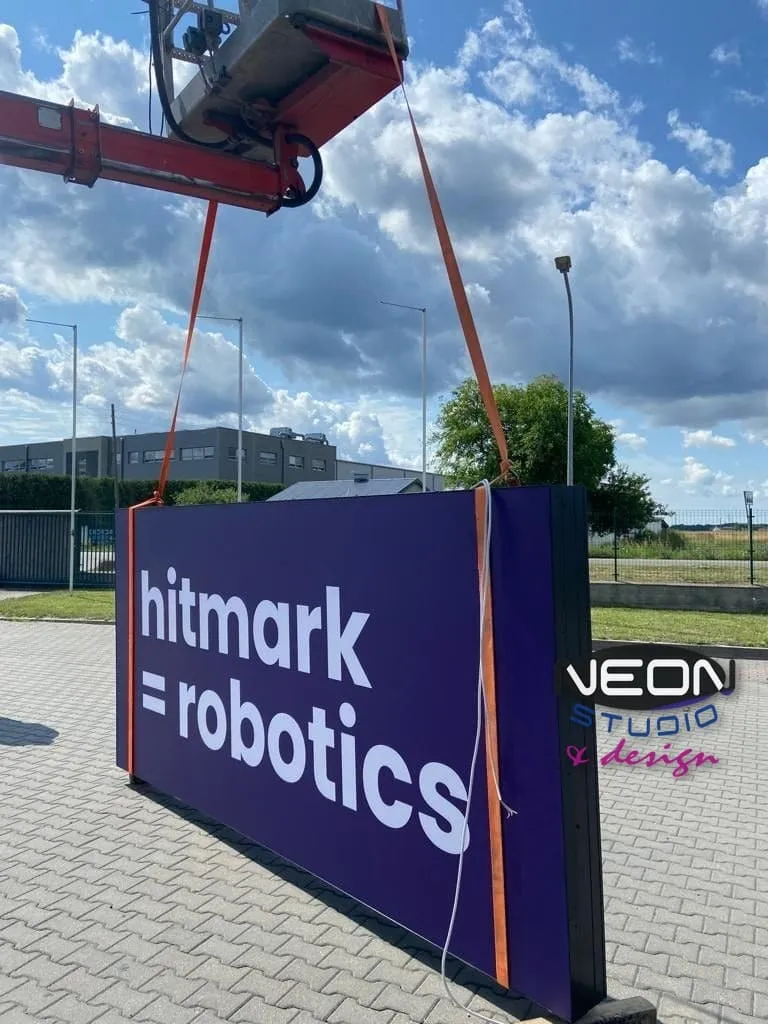
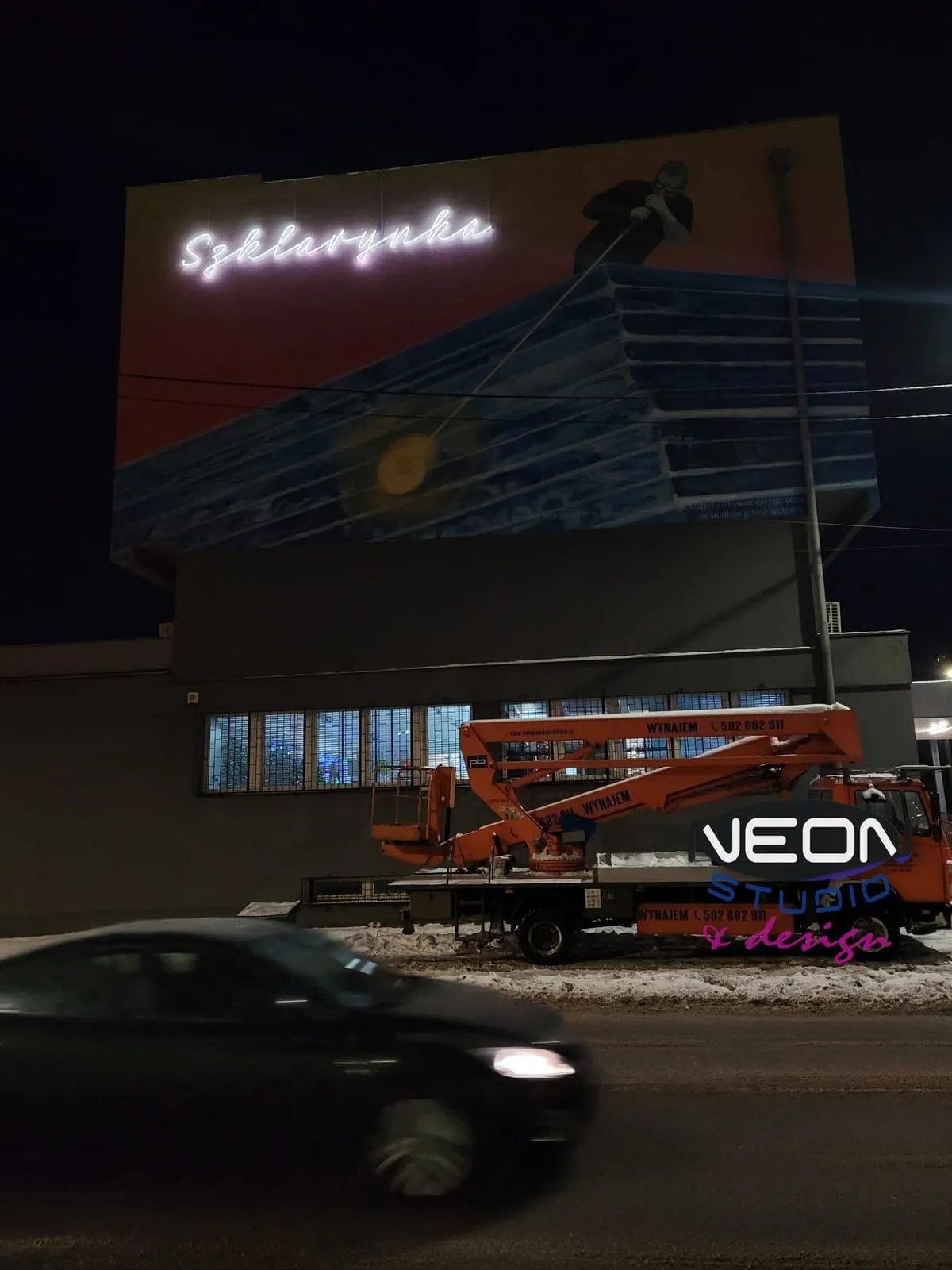
Higher up, and wherever scaffolding cannot be put up, we work from an aerial work platform — that is how the Szklarynka neon went up on a building wall and how we installed the neons in the former Cepelia building. With a large light box the lift's boom also helps with the lifting itself: the Hitmark Robotics light box reached its high-mounted surface suspended on straps.
The survey decides the equipment, and we arrange it ourselves as part of the installation logistics.
Fixings — the part you do not see
From the street you see the face of the light box, the letters or the neon tube. You do not see what it all hangs on: brackets, anchors, spacers, the supporting frame. Yet it is the fixings that decide whether the sign still hangs straight after a few seasons of wind and frost.
The fixing method depends on the surface: masonry, an insulated facade, a steel structure or an indoor ceiling each need a different approach. Installation has to protect facades and interior walls — the fixings carry the sign's weight without damaging what they are fixed to.
The second hidden thing is the cabling: it runs inside the structure or through the facade into the building, and the power supply is hidden but accessible — so that years later a small repair does not mean taking half the sign apart.
Power and connection
We make the connections to the electrical installation — it is part of the installation work, not a separate job for an electrician. Before installation we only need to agree where the sign will take its power from and whether it should switch on with the venue's lighting or separately.
Each technology has its own specifics here:
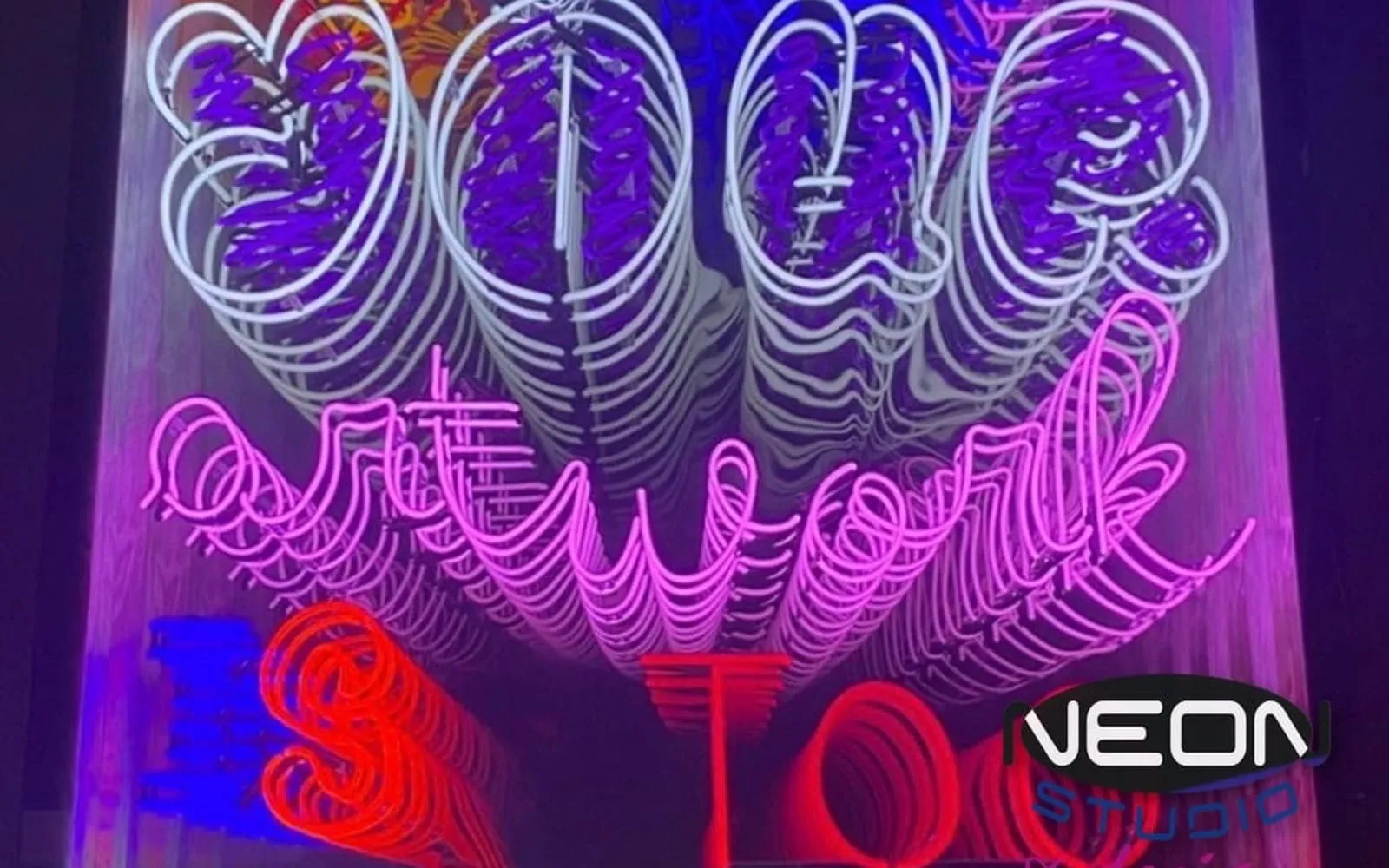
- —Glass neon: the tube has its own power supply, placed close to the neon and accessible for servicing. Glass is delicate, so we handle transport, installation and connection ourselves.
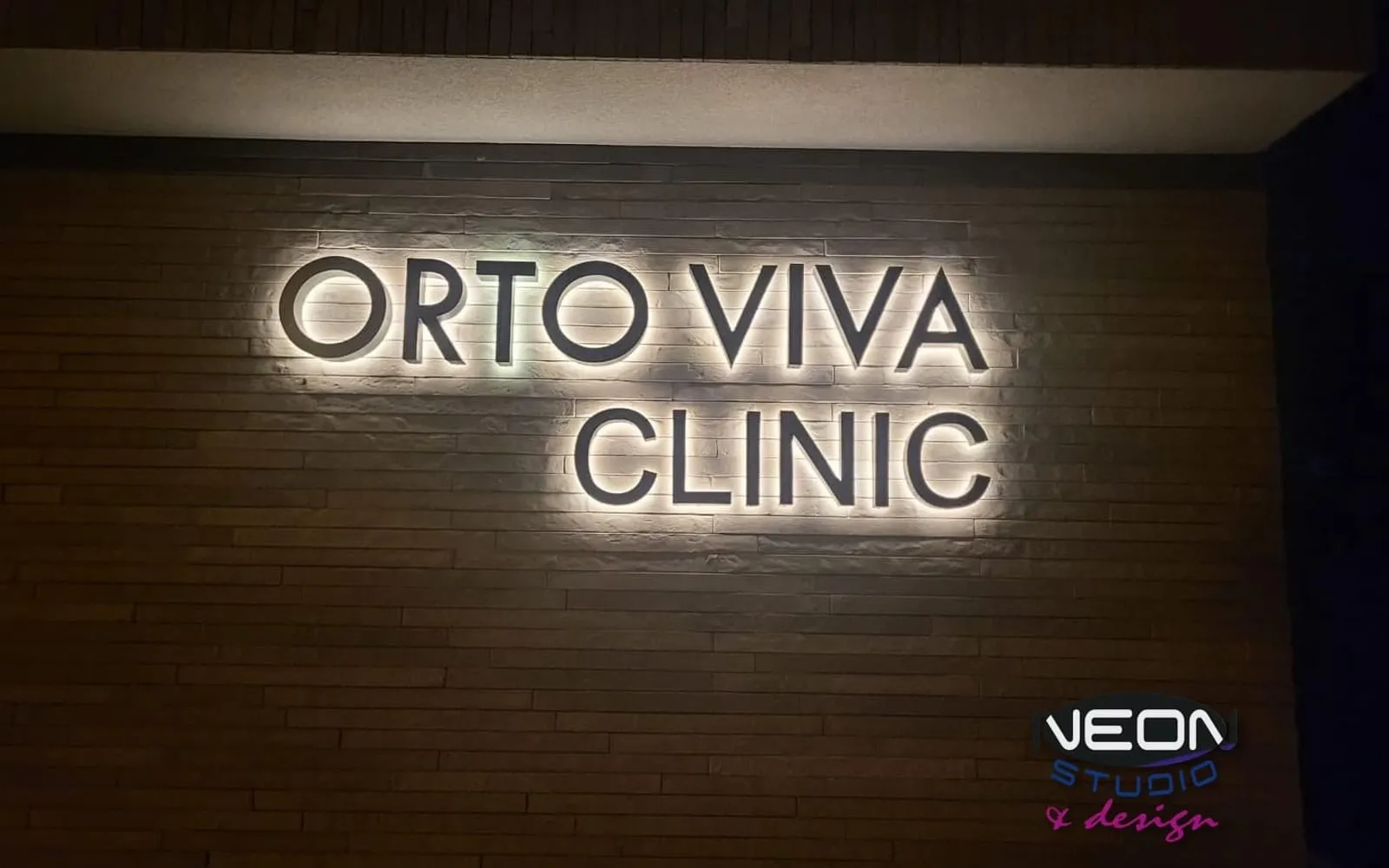
- —Light boxes and letters: LED modules inside the housing, with the power supply hidden in the light box, behind the letters or indoors. With 3D letters no cables should be visible from the street.
Already have a project in mind?
Get a free quoteInstalling in an open venue or a shopping centre
Most installations happen while the venue is trading — a shop or restaurant does not close for a day just because it is changing its sign. We plan the date and order of work to disrupt customers as little as possible and cordon off the area beneath the mounting point. Indoors, the time before opening or after closing is often a good moment.
In shopping centres and arcades there is also the centre management. It decides what signage is allowed on a shopfront, in which zone and to what specification. It is worth asking straight away when and on what terms installation work can be carried out — the guidelines are best in hand before the design, not after it. We advise on installation and formalities.
Removing the old sign before the new one goes up
A new sign often goes up where an old one hung — left by a previous tenant, outdated by a rebrand or not worth repairing. We remove previous signage, including disconnecting it from the electrical installation.
It is most convenient to do both stages in one visit, with the same equipment. Removal leaves marks from the fixings, so during the survey we already check whether the new sign will cover them.
A removed glass neon does not have to end up as scrap. If it is worth keeping, it can be restored — in this field our work includes 130 neons restored for the Neon Museum.
Why install with the maker — no subcontractors
We carry out our projects one hundred per cent in-house, with no subcontractors — from design, through production in our workshop in Rybie near Raszyn, to installation and connection. We install with our own team, certified to work at heights. In practice this means one contractor from design to the illuminated sign.
This has concrete consequences on installation day. The crew hanging the sign knows its construction because they built it — they know where the fixing points are, how the cables were routed and which element is the most delicate. If something needs adjusting on site, the decision is made on the spot.
Years later the same company that installed the sign services it — with no argument over whether a fault comes from production or installation.
Our installations — from the metro to a light box at height
A few projects from our gallery showing different conditions: a metro station, a building wall, a food zone under a canopy and a light box lifted high. One team handled each from production to installation.
| Project | What we installed | How |
|---|---|---|
| Warsaw Metro — Księcia Janusza | Glass neons | Installation at the metro station |
| Szklarynka | Glass neon | From an aerial work platform |
| Nocny Market | Neons | In the food zone |
| Park Glinianka | Glass neons | Delivery by our own truck and installation |
| Hitmark Robotics | Light box | On a high-mounted surface |
| Former Cepelia building | Neons | From an aerial work platform |
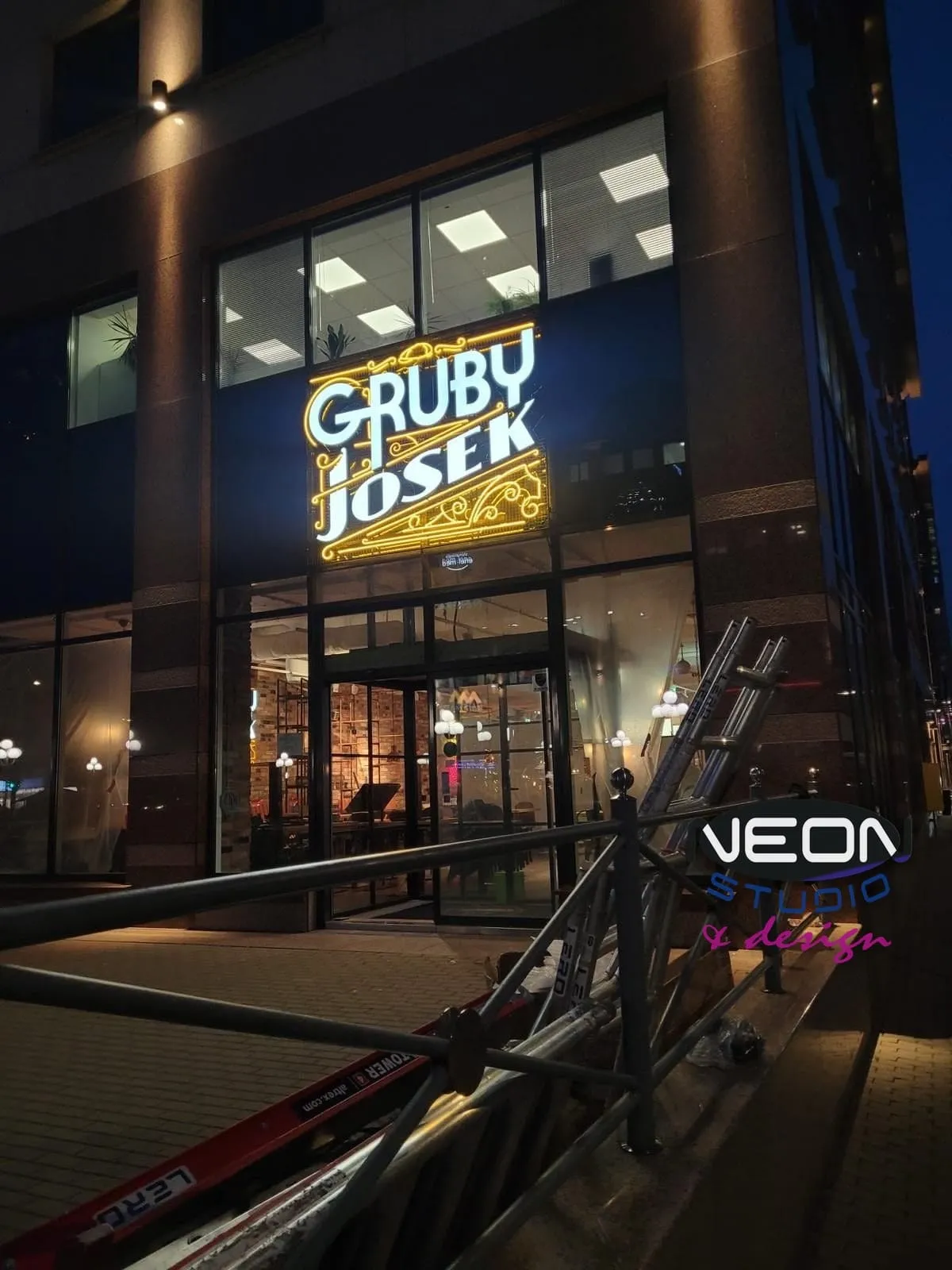
| Gruby Josek | Glass neons with 3D letters | A sign combining both technologies |
What to agree before the installation date
A quote for installation is free and carries no obligation. The more we know before the date, the more smoothly the installation itself goes.
- —The address and photos of the site: the whole facade or wall, a close-up of the mounting point and what lies beneath it.
- —Whether the sign is ours or ordered elsewhere — if the latter, its dimensions and fixing method.
- —Where power can be brought from and how the sign should be switched on.
- —Whether an old sign at that spot needs removing.
- —Consent from the building owner or manager, and in a shopping centre — the management's guidelines and the hours when work is allowed.
- —Opening hours and the days when work would disrupt least.
- —The date by which the sign should be lit — an opening, for example.
Frequently asked questions
- Do you install yourselves or through subcontractors?
- Ourselves. We carry out our projects one hundred per cent in-house, with no subcontractors — installation and electrical connection included. We install with our own team, certified to work at heights.
- When is scaffolding or a lift needed?
- It depends on height, access from below and the size of the element. Indoors and low down a ladder often suffices, above a shop window scaffolding, higher up an aerial work platform. We choose and arrange it after the survey.
- Who connects the sign to the mains?
- We do. We make the connections to the electrical installation — it is part of the installation work, not a separate job for an electrician. Before installation we only need to agree where the sign will take its power from.
- Do you remove old signs?
- Yes. We undertake the removal of previous signage, including disconnecting it from the installation. If a new sign is to go up in its place, we combine both stages in one visit.
- Can you install while the venue is open?
- Yes. We plan the date and the order of work to disrupt customers as little as possible and cordon off the area beneath the mounting point. In shopping centres the management's guidelines also apply.
- How do I get a quote for installation?
- Through the form on the contact page. The quote is free and carries no obligation; photos of the site and details of the power supply and any old sign speed it up.