Lightboxes: types and how to choose
Single-sided, double-sided projecting, routed, round or 3D with a flexible face? A guide to the types of advertising lightbox, shown on our own work.
A lightbox in one sentence
An advertising lightbox is a closed, illuminated body with a face — the panel carrying the name, logo or graphics. The light sits inside; outside you see an even glowing surface or only parts of it. That is what every type below has in common.
Types differ in whether the lightbox shines on one side or two, whether the whole face glows or only the letters, and in shape. That decides who reads the sign and from where. This guide helps you pick the type before a quote, using examples from our gallery.
Single-sided lightbox for a facade
The most common form: a flat lightbox on the wall above the entrance or window, shining towards the street. Its large, even glowing surface reads from a distance and stands out even among neighbours' illuminated signs. The face holds more than a name — a logo, a tagline, the trade.
We have made them for the New Vegas pizzeria and Fuego, and for companies such as Dell and Delia Cosmetics. Indoors they work as decoration or signage — like the Bombay Sapphire lightbox or the restroom signage at Senora Senor.
The limitation is geometry: a flat sign is seen by whoever stands opposite. Someone walking along the building notices it only at the door.
Projecting sign: a double-sided lightbox at right angles
A projecting sign — „semafor” in Polish — is a lightbox on a bracket at right angles to the facade, lit on both sides. It reads from both directions of the street, exactly the audience a flat sign misses. On a busy pavement, one projecting sign often does more than a bigger facade sign.
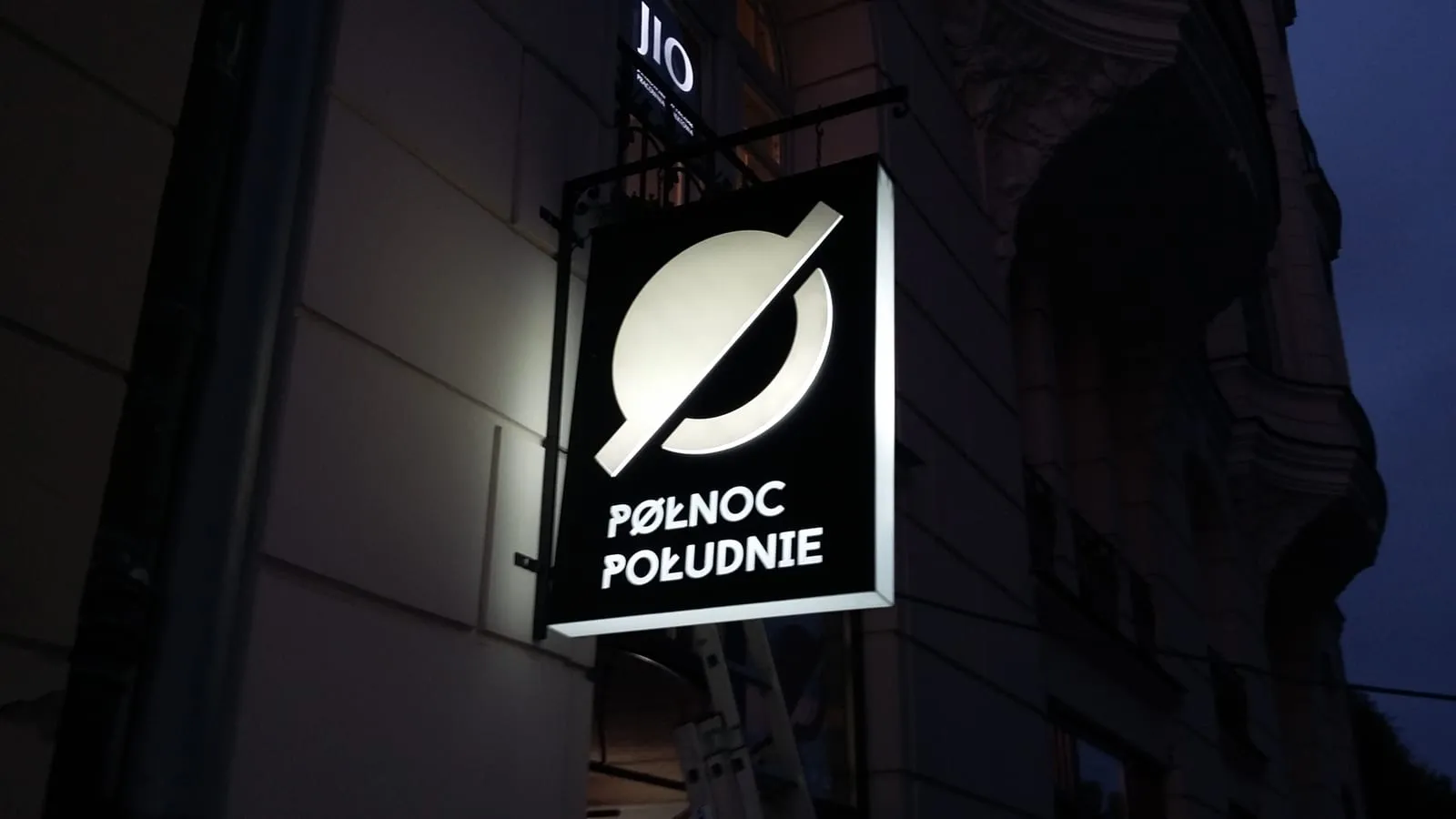
We have made them for Batida and Blue Cactus, among others. A projecting sign can also be routed — as below, where only the symbol and name glow on both sides. We plan the bracket fixing together with the lightbox.
At the entrance to company premises a double-sided or freestanding lightbox does the same job — like the polycarbonate-faced one on the JLM company fence.
Routed lightbox — only the letters and logo glow
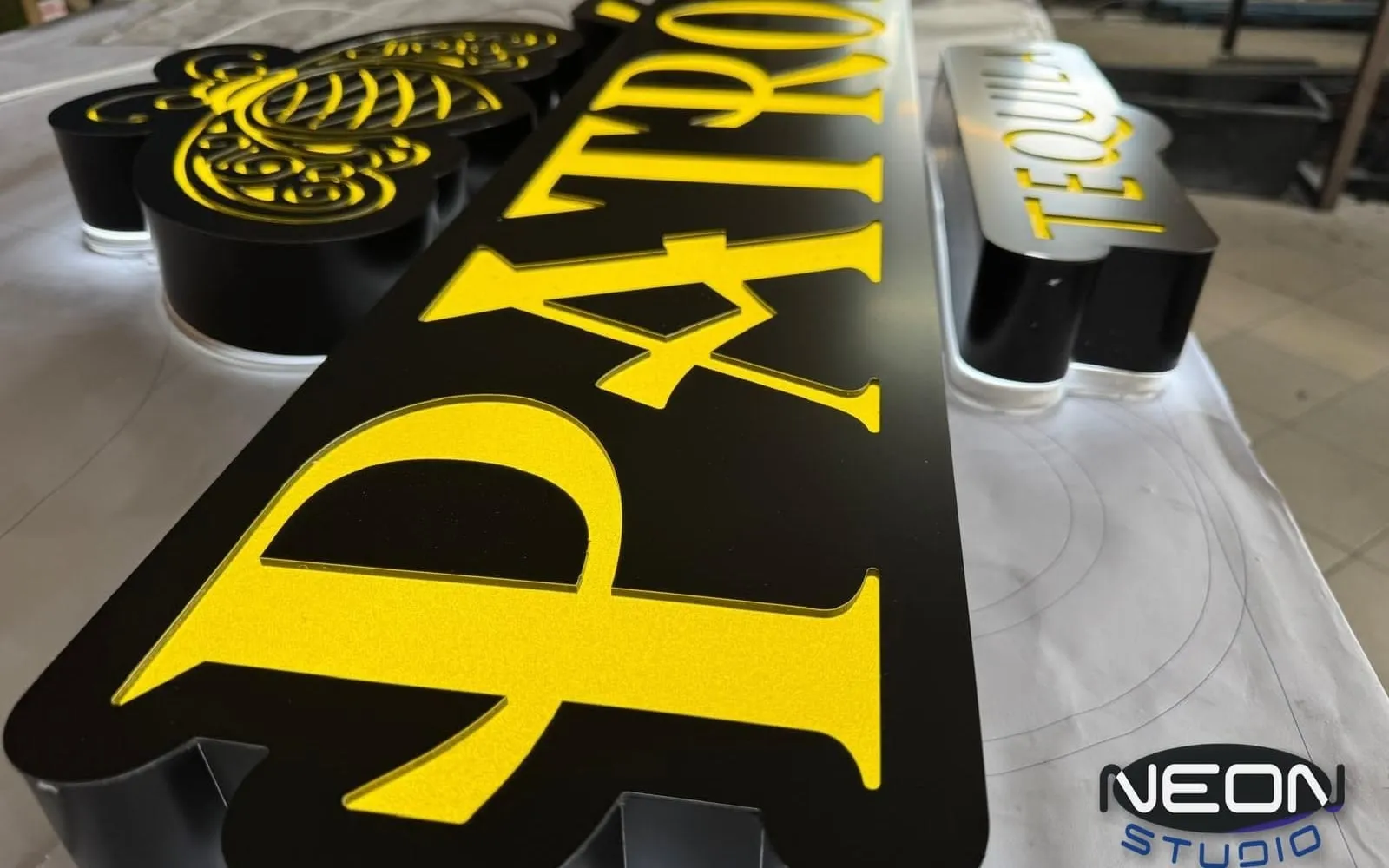
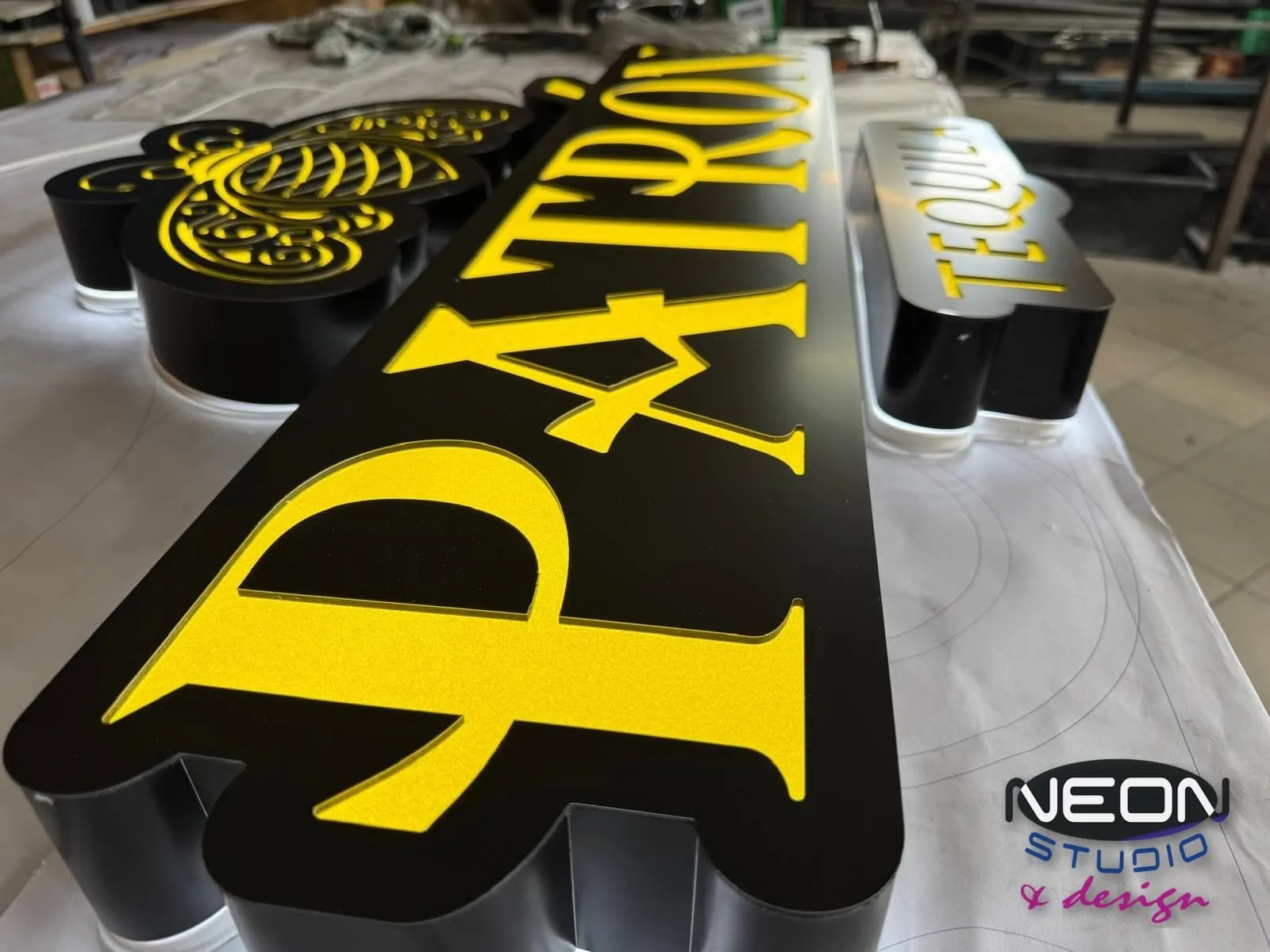
In a routed lightbox the face does not glow as a whole. Letters and logo are cut out of the panel and light passes only through them. After dark you see a dark body and glowing lettering, legible without flooding the facade with light — like the JLM lightbox at night.
These use dibond, which allows precise, complex shapes to be routed and looks refined. Letters can sit flush or be raised for a 3D effect, as in the lightbox with milled, raised letters for the Bocian brand.
It also looks good by day, so it suits signage that must look elegant at any hour. For a chain of Warsaw ice-cream parlours we combined routed lightboxes with glass neon, making every outlet recognisable at first glance.
Custom shapes — round, 3D, with a flexible face
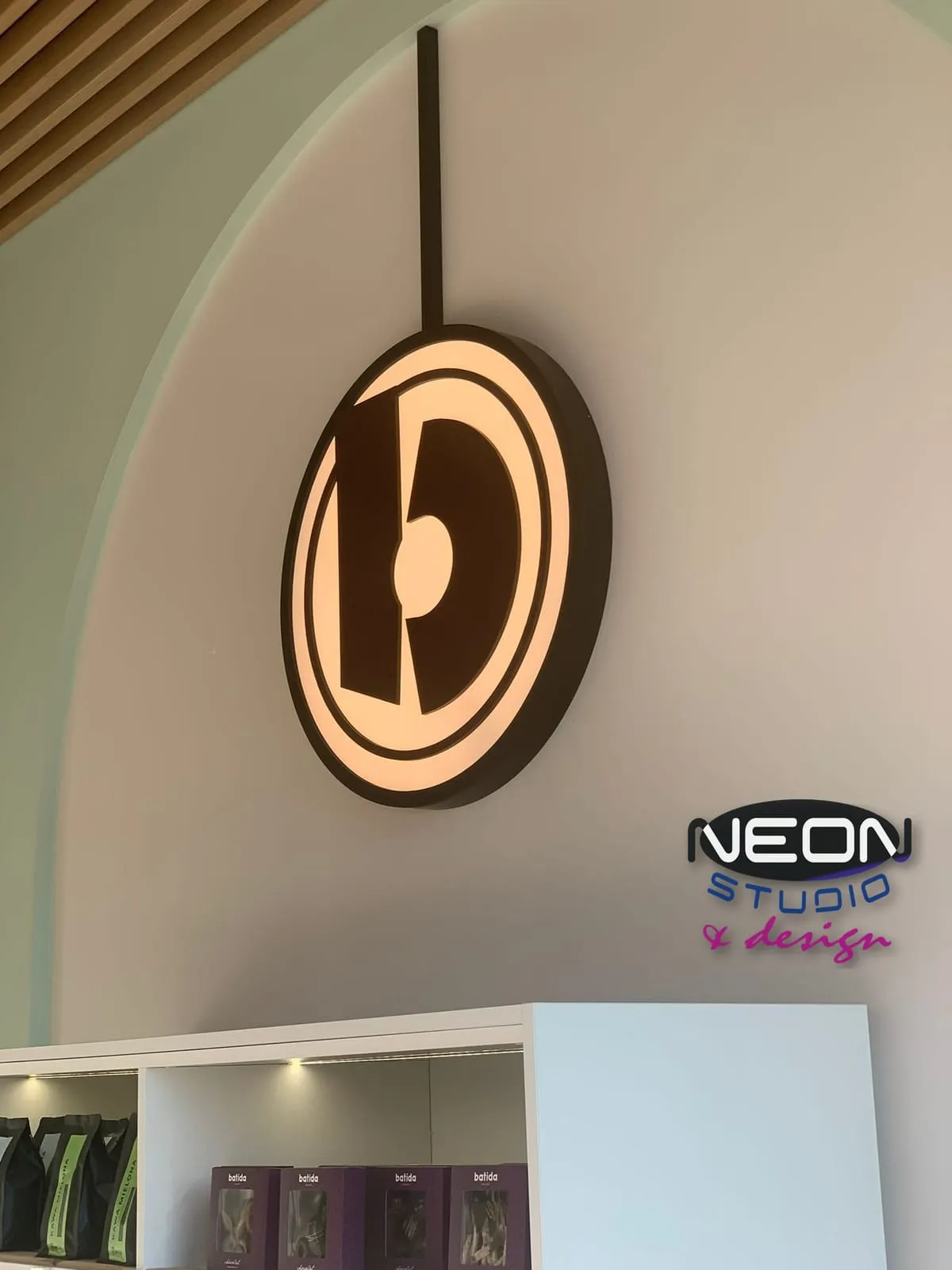
A lightbox need not be a rectangle — size and shape depend on the client's needs and purpose.
A flexible face suits large formats: by day it resembles a billboard, by night it glows thanks to energy-saving LEDs inside. That is how the large purple Hitmark Robotics lightbox on a facade was made.
- —Round lightbox: a natural fit for a logo set in a ring. For Batida we made one with the brand's old logo, hung inside the venue.
- —3D lightbox: a dimensional body shaped like a motif — such as the cloud-shaped lightboxes for The Brain Embassy or a freestanding 3D lightbox.
- —Flexible-face lightbox: high-grade aluminium profiles with vinyl fabric stretched over them, lit from within, so the carrier can take any size and shape.
Already have a project in mind?
Get a free quoteWhat the face is made of
The face is what people see, so its material shapes how the lightbox glows and looks by day. The body is usually a light aluminium construction; the face is one of four materials.
For facades we use materials resistant to rain, frost and UV, and outdoor lightboxes get seals protecting the body and electronics. We advise on the material when quoting.
- —Plexiglas: the classic fill when the whole face should glow.
- —Polycarbonate: a traditional lightbox face, like the one on the JLM fence.
- —Dibond: allows complex shapes and precise routing; the basis of routed lightboxes.
- —Vinyl fabric: stretched over aluminium profiles and printed, for large or unusual shapes.
Lightbox with glass neon inside
Here the light source is glass neon, not LEDs. The body gives form and shields the tube; the neon gives a deep, vivid glow with a halo no other technology matches.
See the ROCKET and ROCKSTAR projects — glass neon in a lightbox, as open 3D letters with neon run through the centre. Pomodoro, at Stara Papiernia in Konstancin, is a double-sided glass neon in a decorative lightbox. For the Bracia Sośniccy patisserie, glass neon, 3D letters and a lightbox form one sign.
Another variant is the marquee lightbox with bulbs, as above the Okienko shop window. Outdoors, glass neon is the right choice — we recommend LED neon for indoor use only.
Comparing the types of lightbox
Two questions decide the choice: how the lightbox glows and where the customer looks from. Types can be combined — a routed projecting sign, for example.
| Type | How it glows | Visible from | Typical location |
|---|---|---|---|
| Single-sided | The whole face, as an even surface | Straight ahead | Facade above the entrance or window, interiors |
| Projecting (double-sided) | Both sides of the face | Both directions of the street | Facade by the pavement, on a bracket |
| Routed | Only the cut-out letters and logo | One or two sides | Facade, when the sign must look elegant by day too |
| Round and 3D | Depends on the design | Depends on the mounting | Logo in a ring, interiors, freestanding forms |
| Flexible face | The whole fabric, from within | Straight ahead, from a long distance | Large facades, large-format carriers |
| With glass neon | Neon tube with a halo | One or two sides | Venues where character matters |
Installation and servicing — a lightbox is built to last
A lightbox is a powered structure that works all year in rain, frost and sun. We install ourselves, safely for the facade — with certificates for work at height and connection to the electrical installation. We also remove the previous sign.
After start-up we provide servicing and maintenance. In LED lightboxes the usual fault is one segment going dark, caused by the power supply, a cable or moisture in the housing. Checking the housing after winter and summer catches a cracked seal before water gets in.
What to prepare for a lightbox quote
The quote is free and carries no obligation. We have made lightboxes since 2000 in our workshop in Rybie near Warsaw, one hundred per cent in-house, with no subcontractors. From your logo we prepare a design, visualisation and quote, and advise on installation and formalities.
- —Photos of the facade — straight on and from the pavement both ways.
- —The logo as a vector file, or a photo to start with.
- —Facade or window width and the mounting height.
- —From where customers should read it — this settles single- or double-sided.
- —Whole face glowing, or only letters and logo.
- —Whether there is power, and an old sign to remove.
Frequently asked questions
- How does a lightbox differ from 3D letters?
- 3D letters are separate characters on the facade — lighter, leaving the background visible. A lightbox is one housing with a lit face that holds a logo and more content, so it often reads from further away.
- What is a projecting sign?
- A lightbox on a bracket at right angles to the wall, lit on both sides and legible from both directions of the street.
- Can a lightbox be any shape?
- Yes — round, 3D (cloud-shaped, for example) or freestanding. For large formats the flexible-face method, vinyl fabric on aluminium profiles, allows any size and shape.
- What is the face made of?
- Plexiglas, polycarbonate or dibond; for flexible-face lightboxes, vinyl fabric lit from within. Dibond allows precise routing. We match the material to the design.
- Do you install lightboxes at height?
- Yes, ourselves, with certificates for work at height and electrical connection. We also remove old signs and service them.
- Is the quote free?
- Yes, free and with no obligation. From your logo and a facade photo we prepare a design, visualisation and quote.