Restoring old neons — repair or replace
An old glass neon rarely needs throwing away. What breaks in it, when restoration makes sense, and what restoring 130 neons for the Neon Museum taught us.
An old neon is not scrap
A glass neon that has stopped glowing looks like the end of a story: dark tubes, a rusted frame, sometimes missing letters. Yet it is one of the few advertising media that can be brought back to life in almost its original state. The tube is glass, and glass does not age the way plastics do: it can crack, but it does not crumble. At most the phosphor coating inside loses brightness — and that is restored with a new segment.
The same skill that lets us build a neon from scratch lets us save an old one. That is why neons made decades ago come to us and, after restoration, return to facades or to museum halls.
Old neons in Warsaw are a chapter of the city's history in their own right — some have gone to the Neon Museum, others still hang on facades waiting for the owner to decide: repair, recreate or replace. This article helps make that decision on the basis of the glass, the structure and the power supply, not the neon's age alone. We write from the perspective of a workshop that has been making and repairing glass neons since 2000.
What breaks in a glass neon
The most common fault is a cracked tube — from an impact, vibration of the structure, a branch, or fixings tired with age. A cracked tube loses its gas and the whole segment goes dark, even though the rest of the neon is fine. Second place goes to the power supply: electrical components working for years on a facade eventually give up, and the neon goes dark entirely although the glass is intact. A tube can also lose brightness without cracking — the electrodes and the gas wear out; such a segment is refilled.
The third kind of problem concerns not the neon itself but what it hangs on: a corroded structure, loose brackets, wiring with cracked insulation. Those parts are replaced outright, because safe installation depends on them.
It is also worth remembering that old neons were often mounted on structures nobody has checked since. Before a neon returns to the facade we therefore look not only at the glass and the power supply, but also at whether the structure itself is still fit for safe installation.
Restoration or a new neon — how to judge
The decision depends on three things: exactly what is damaged, whether the neon has value that a new product cannot recreate, and the condition of the supporting structure. The table below sorts out the typical cases.
| Condition | What we usually do | Note |
|---|---|---|
| A few cracked segments, the rest glows | New tube segments, gas refill | The most common and most economical case |
| Nothing glows, glass intact | New power supply and wiring | Usually without replacing glass; a segment refilled if needed |
| Historic lettering, unusual design | Restoration preserving the original | A new neon would not match the character |
| Corroded supporting structure | New structure, neon transferred | A condition of safe installation |
| Most glass missing, name changed | New neon to the old design | Restoration makes no economic sense |
How restoration works in our workshop
We start with an inspection on site, or from photographs if the neon is already down. We establish which tube segments are sound, which have to be remade, and what state the structure is in. We do the removal ourselves, including from facades at height — we are certified for it and have our own transport, which is no small detail with objects made of glass.
In the workshop the damaged segments are bent anew, by hand over a burner, exactly to the shape of the original, and filled with noble gas. The sound segments stay. Then the neon is powered up and checked in the dark before it goes back with a new power supply and fixings.
130 neons for the Neon Museum in Warsaw
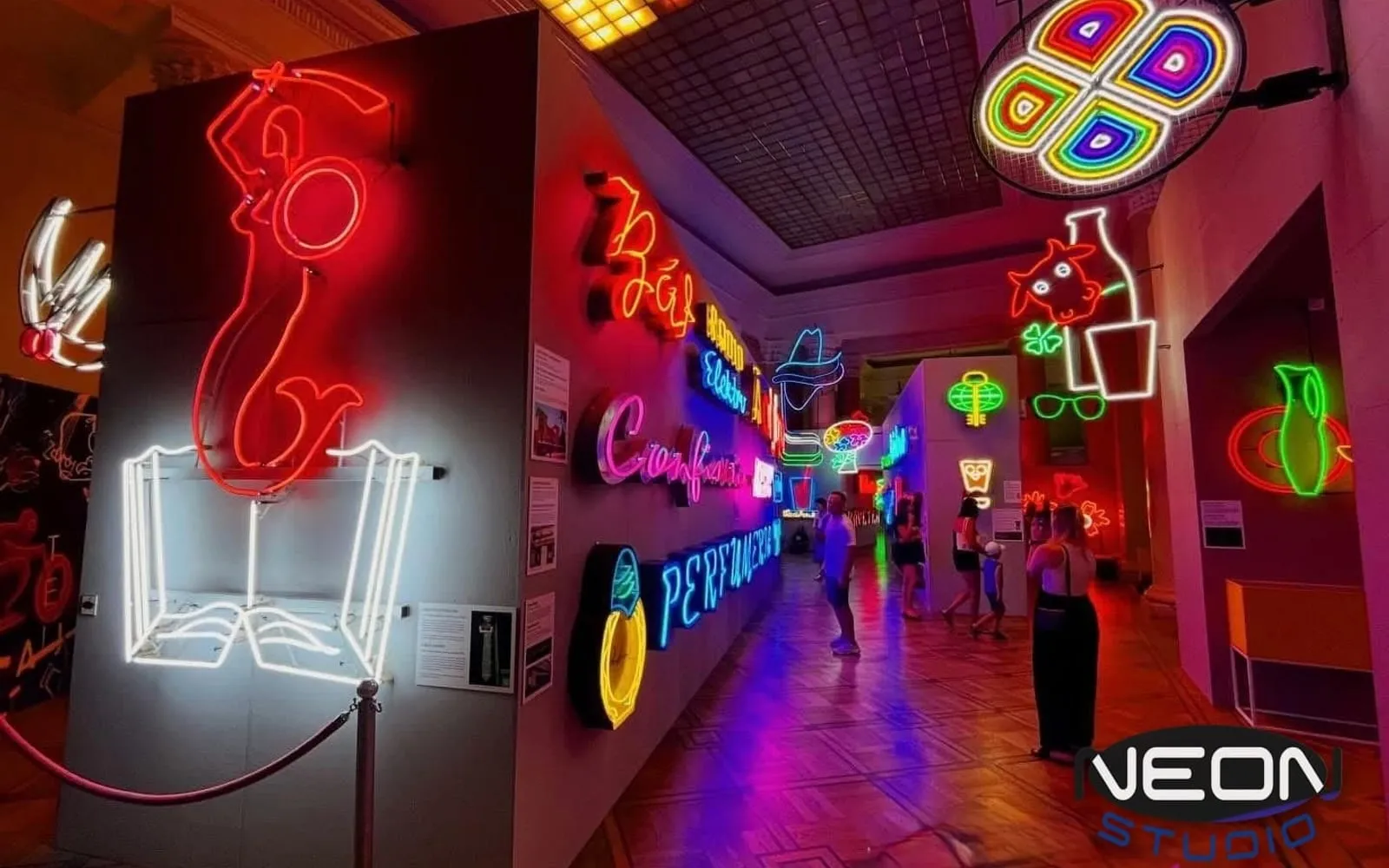
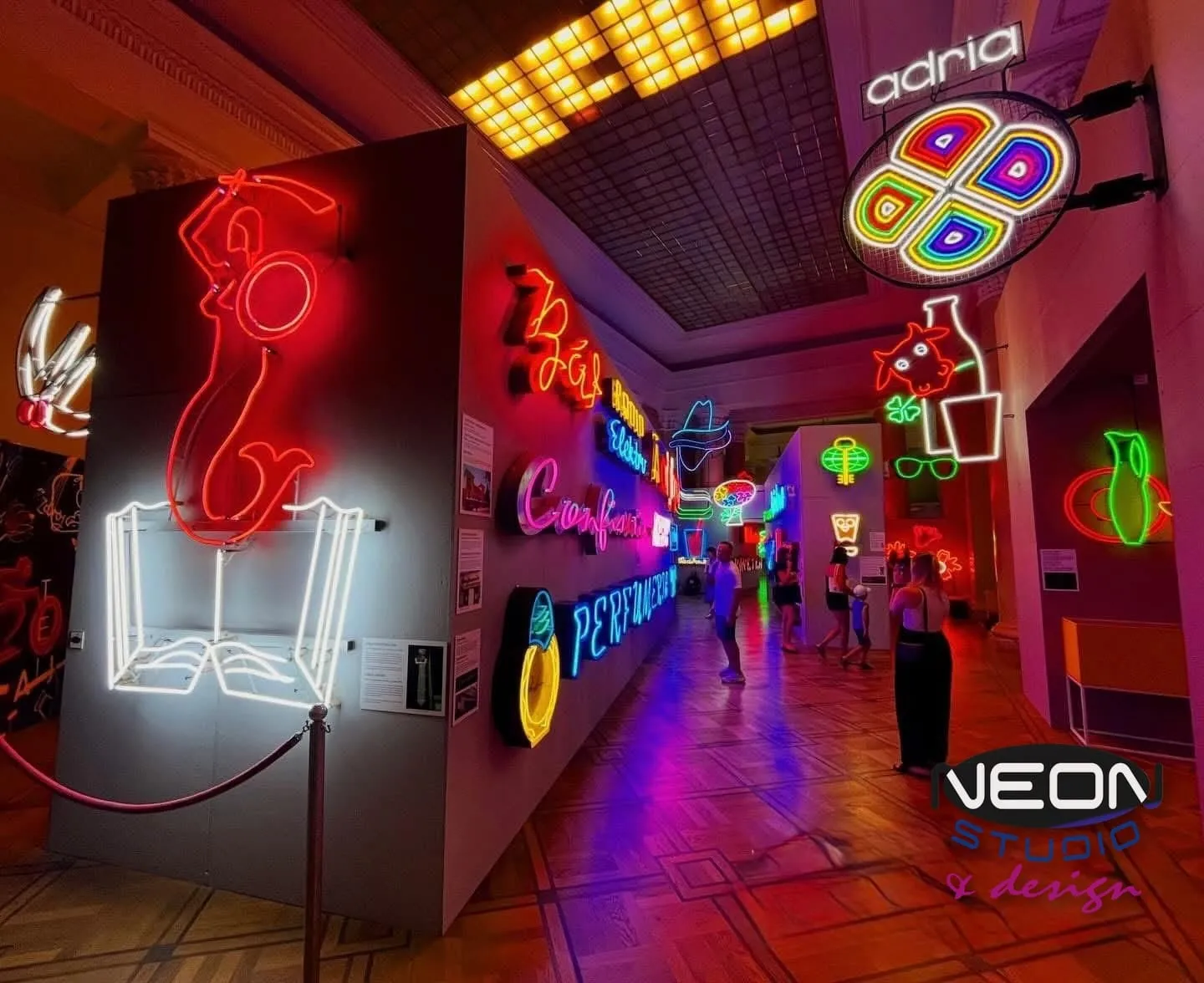
Our longest restoration collaboration is 130 glass neons restored for the Neon Museum in Warsaw. They are exhibits from different decades and in very different condition, so each needed its own decision: what stays and what is made anew.
Working on so large a collection taught us one thing: every old neon is different and no two repairs are alike. That is why we quote a restoration only after seeing the specific piece.
Already have a project in mind?
Get a free quoteCepelia — the pavilion's neons return to the facade
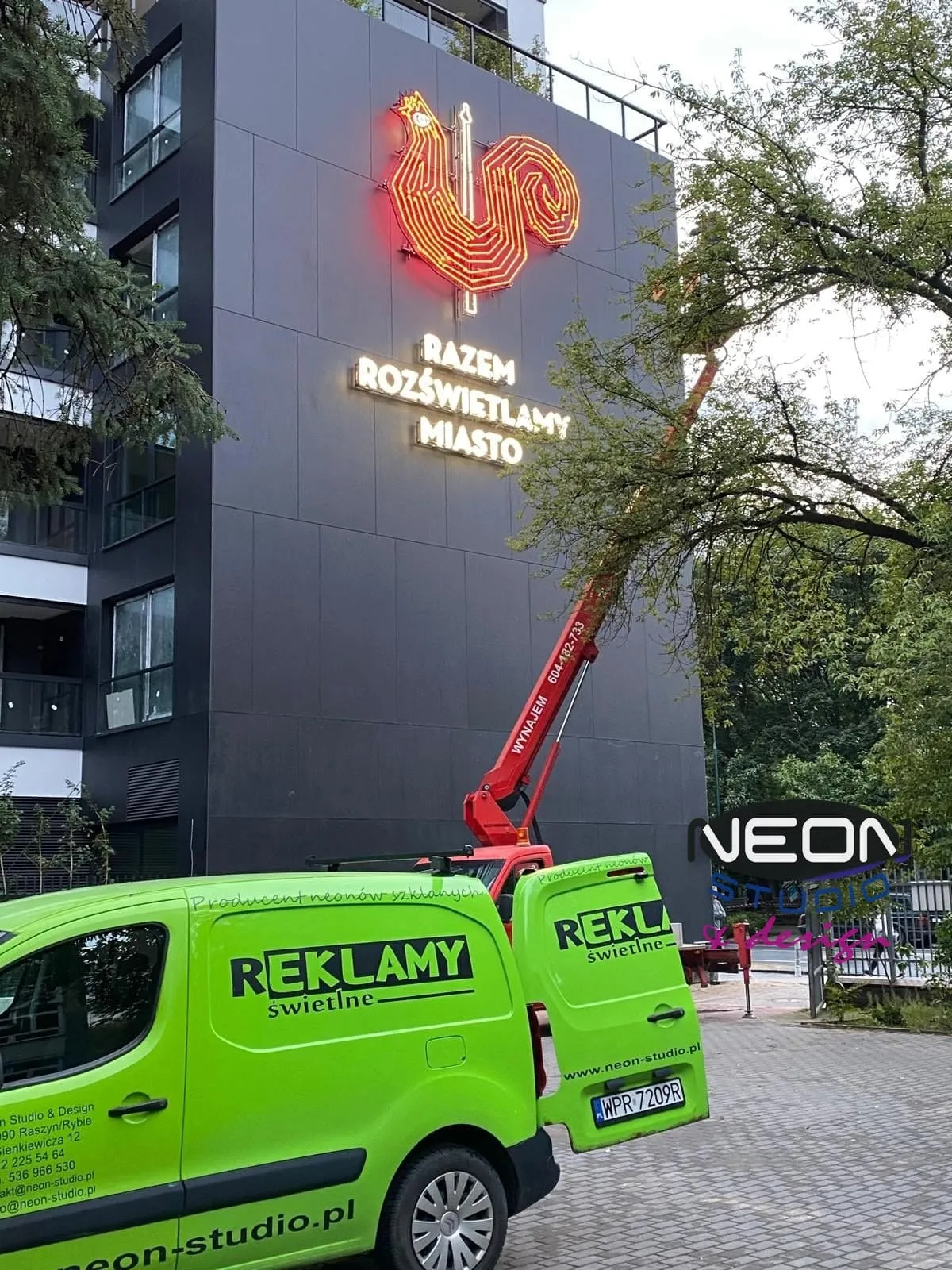
The second example is the historic neons from the Cepelia pavilion in Warsaw, which we restored and reinstalled on the facade. It is a project where restoration and new signage met in one building: next to the restored neons, new signage for Empik was made, also in glass neon.
A television feature was made about the restoration of the Cepelia neons — you can watch it in the Media section on our homepage, alongside the ARTE report about our workshop.
The milk bar cow — from the street to the museum
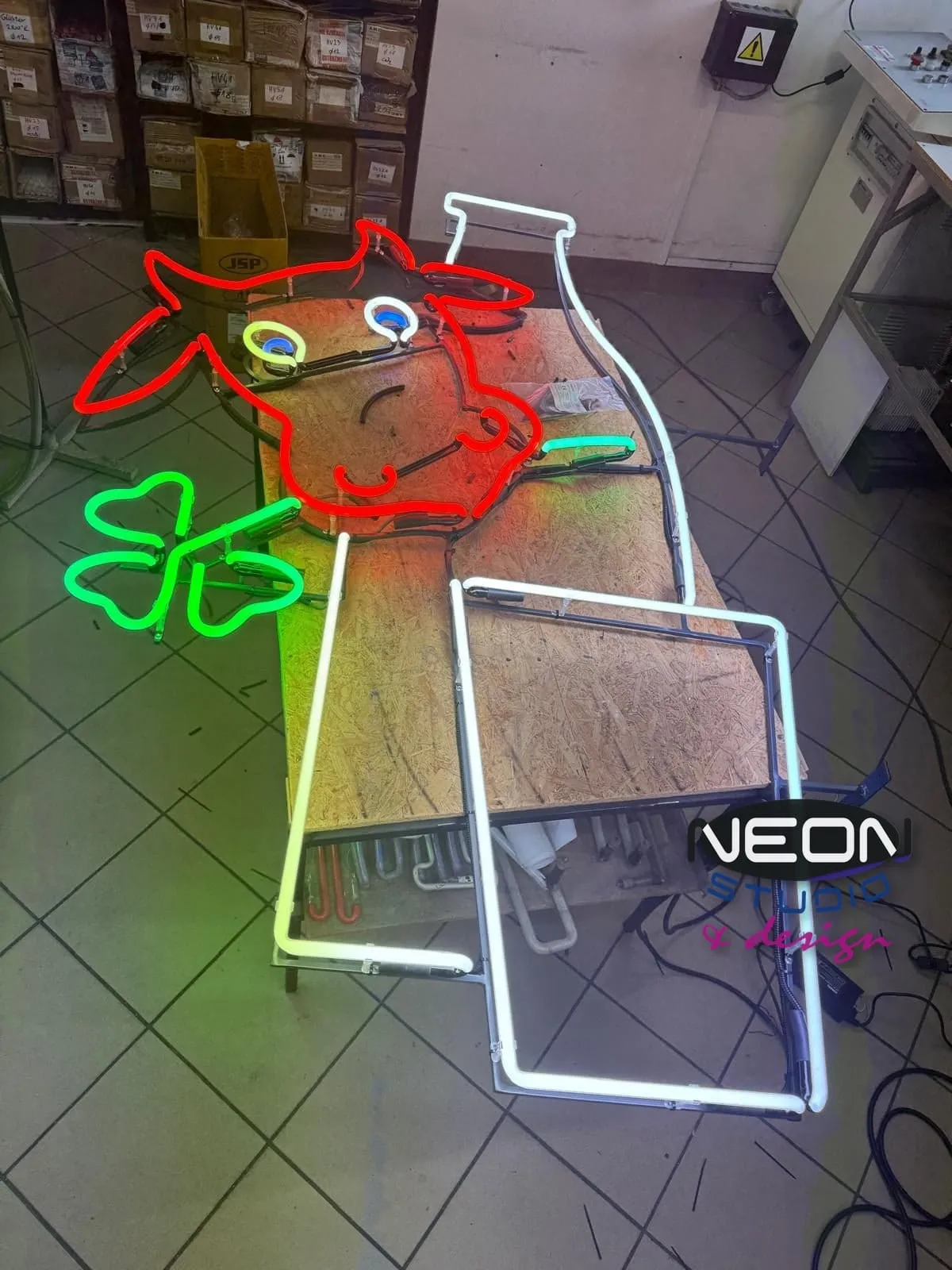
Among the neons that passed through our workshop into the Neon Museum's collection is a glass neon shaped like a cow — the former logo of a milk bar. It is a good example of why old neons are worth saving: nobody would design such a mark from scratch today, because it belongs to another era of applied graphics.
Objects like this have value not only for museums. A venue taking over the premises of a former shop or bar can keep the old neon as part of the interior — with a new power supply and restored glass.
Why old neons are coming back
Glass neon is returning to facades and interiors for the same reason good typography returns: it is an original product with a deep glow no other technology reproduces. An old neon has one thing more that a new one cannot have — the history of a place. Passers-by remember it from childhood, and for a new venue that is free brand recognition.
We make neons both as exterior advertising and as interior decoration, so a restored neon can return to where it hung or find a new place.
For the owner of the premises this has a practical side too: a restored neon is usually the one element of the facade that neighbours and customers remember and talk about. That cannot be bought with new signage, whatever the budget.
Maintenance, so it never comes to restoration
Most big repairs begin with something small left unattended: one dark segment nobody replaced, or a loose bracket that a year later ended in a whole letter cracking. We service and maintain existing illuminated advertising so it glows at full brightness for many years.
A regular inspection — checking fixings, wiring and evenness of the glow — costs a fraction of a restoration and lets you plan replacements instead of reacting to a failure in the middle of the season.
If the neon hangs high or above a busy pavement, the inspection is best combined with other work on the facade — one lift, one visit, less disruption for the venue.
What to prepare for a restoration quote
The quote is free and carries no obligation, but a restoration always requires seeing the specific neon — on site or in photographs. The more you show upfront, the faster we answer.
- —Close-up photos of the neon by day and — if it partly glows — after dark.
- —Where it hangs: facade, height, interior, or whether it is already taken down.
- —Exactly what does not work: single segments, everything, the fixings.
- —Whether the neon should return to the same spot or move elsewhere.
- —If possible — old photos of the neon fully working, as a reference.
Frequently asked questions
- What decides whether restoration is worth it?
- The condition of the glass and the structure, not the neon's age. If most tubes are intact and the structure can be repaired, restoration usually makes sense — it keeps the original shape and the history of the sign. We decide after an inspection.
- When does restoration make no sense?
- When most of the glass is missing, the name or logo is changing, and the supporting structure is only fit for replacement. Then it is cheaper and more sensible to make a new neon — to the old pattern if needed.
- How much does neon restoration cost?
- It depends on how many segments must be recreated, the state of the power supply and structure, and where the neon hangs. That is why we quote only after seeing the piece — on site or in photographs. The quote is free.
- Do you restore historic neons?
- Yes. We restored 130 glass neons for the Neon Museum in Warsaw and the historic neons from the Cepelia pavilion, which returned to the facade. On such objects we preserve the original lettering and shape.
- Do you take the neon down from the facade and put it back?
- Yes. We handle removal and reinstallation ourselves, at height as well — we are certified for it — and we move the neon with our own transport. After installation we connect a new power supply and switch the whole sign on.
- Can an old neon go indoors?
- Yes. We make neons both as exterior advertising and as interior decoration, so a restored neon can hang in a venue, an office or a museum hall — like the glass cow from a former milk bar, today in the Neon Museum's collection.