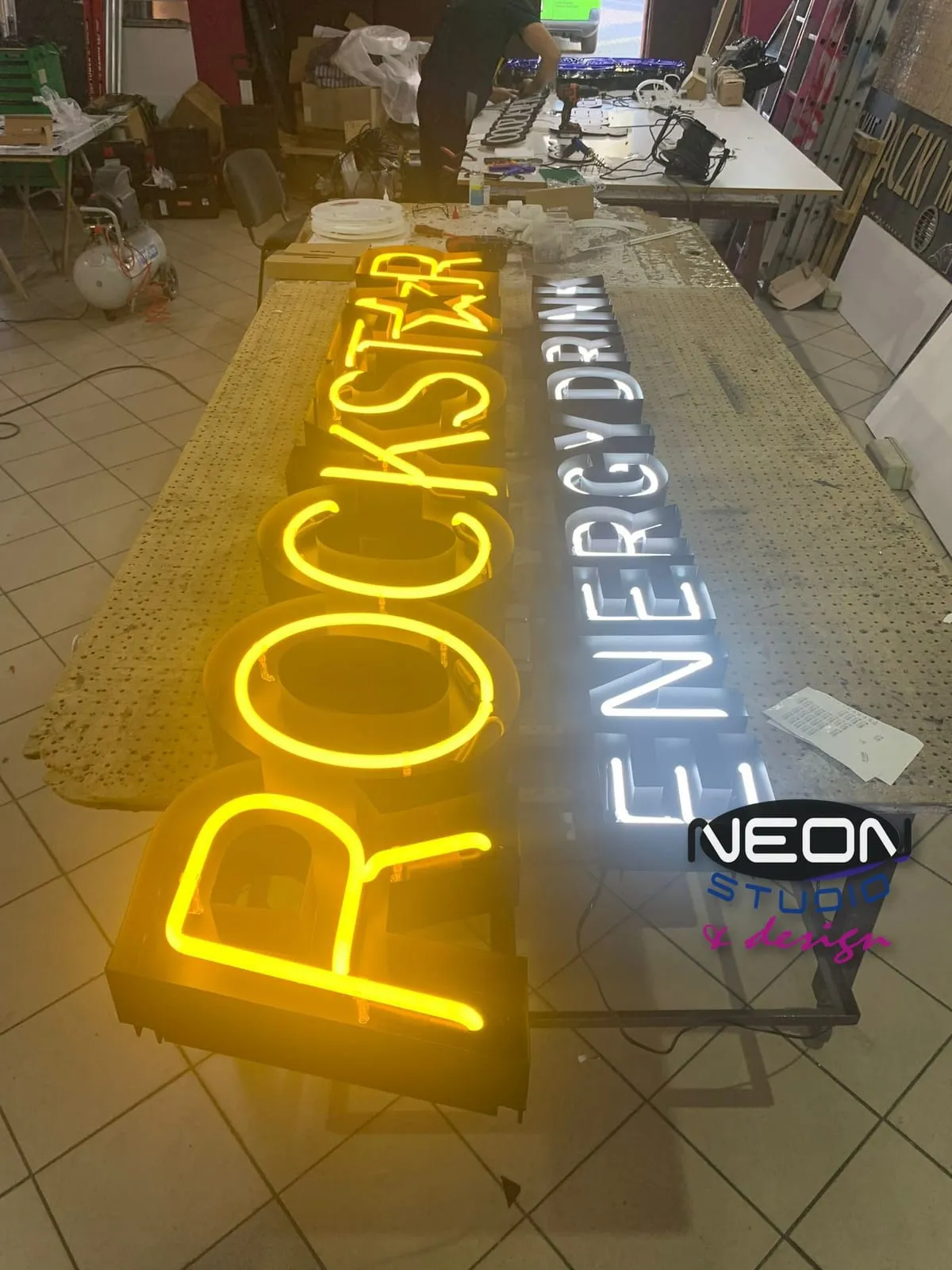
How a glass neon is made — step by step
Glass neon is craftsmanship that cannot be automated. Here is what happens between your logo and the finished sign — and why it takes time.
Why it is worth knowing how it is made
Most companies in illuminated advertising are middlemen: they take the order and pass the work on. We run our own workshop near Warsaw and are one of the few direct manufacturers of traditional glass neon in Europe — our projects are made entirely in-house, with no subcontractors.
For a client that is not trivia but a practical difference: quality control at every stage, no middleman's margin, and the option to see your own neon while it is being made. Clients who want to watch a neon being built are simply welcome in the workshop.
Step 1. Design and visualisation
It all starts with the mark. A vector file of your logo is the best starting point, but a photo or just the wording is enough to begin. From that we prepare a design and a visualisation before production starts — together with a quote, which is free and carries no obligation.
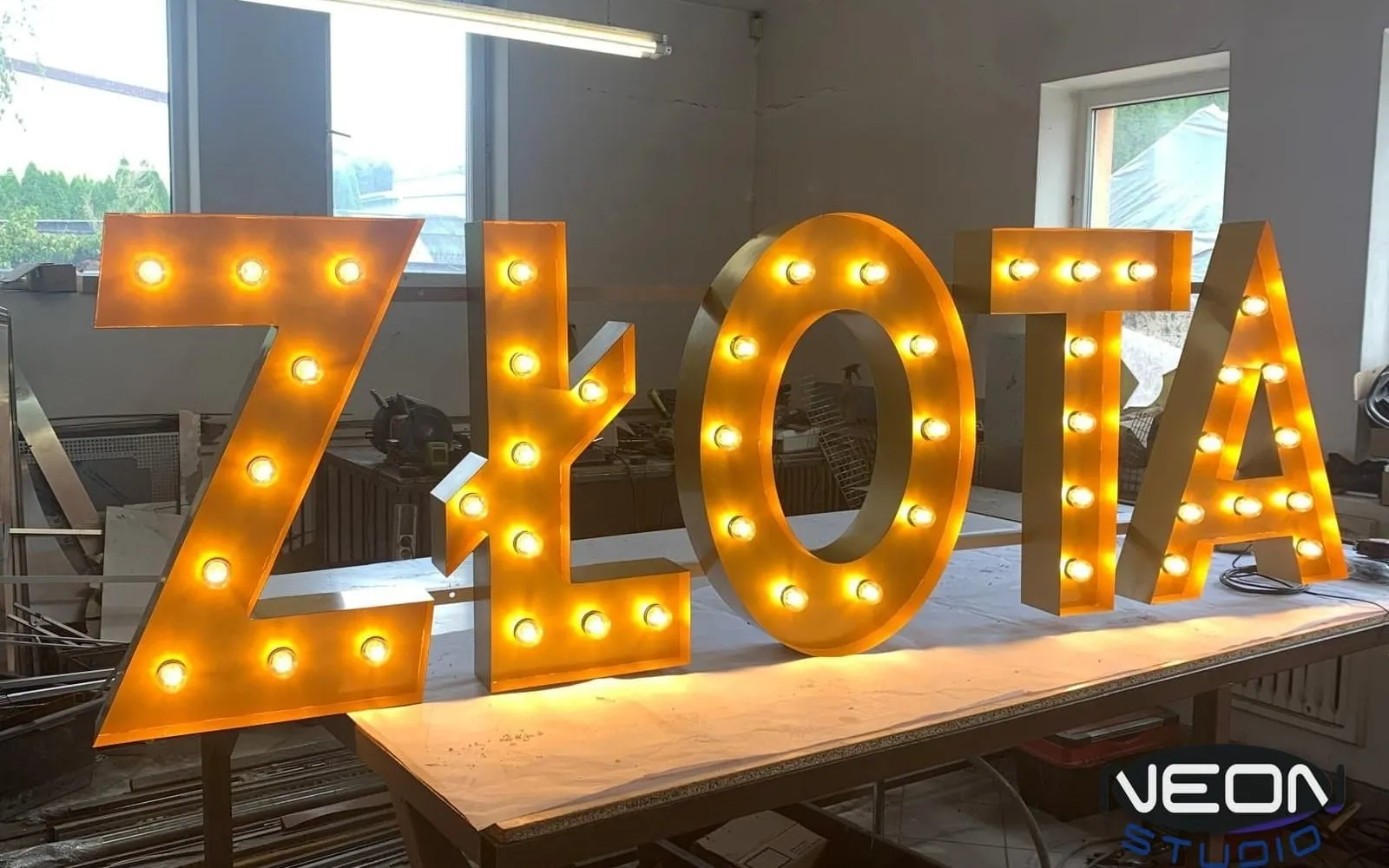
This stage settles decisions that are hard to undo later: overall dimensions, the thickness and routing of the tubes, the glow colours, and whether the neon will hang directly on the wall, on its own structure, or be set inside 3D letters. That last option — neon run through the centre of an open letter — is what we built for ROCKSTAR and ROCKET, among others.
Step 2. Bending the glass by hand
This is the heart of the process and the moment that shows why glass neon cannot be mass-produced. The glass tube is heated over a burner and bent by hand, section by section, until it follows the shape of the letters or the graphic mark from the design.
Every bend is a craftsman's decision: how much to heat the glass, how quickly to form it, where to run the curve so the letter keeps the proportions of the design. There is no machine that does this for a person — which is why two neons carrying the same wording are never identical to the millimetre. That is a property of the product, not a flaw.
Step 3. Noble gas and colour
The formed tube is filled with noble gas. Under voltage the gas begins to glow — and here lies the difference you can see with the naked eye: the light is produced along the entire length of the tube, evenly, with no visible points. That is where the deep, vivid glow and the characteristic halo around the glass come from, and no other technology reproduces them.
By comparison, in LED neon the light comes from diodes hidden under a diffusing material. The effect is cleaner and flatter — perfectly decent, but an imitation of what gas does inside glass.
Step 4. Lighting test in the workshop
Before anything leaves for installation, the neon is powered up and checked at our place — this is when the colours and the evenness of the glow show themselves in the conditions that matter, which is to say after dark.
The stage matters most on large structures, where a correction after mounting on a facade would mean hiring the equipment again and closing the pavement a second time. We ran evening lighting tests in the workshop on our project for Orlen, among others.
Already have a project in mind?
Get a free quoteStep 5. Transport and installation
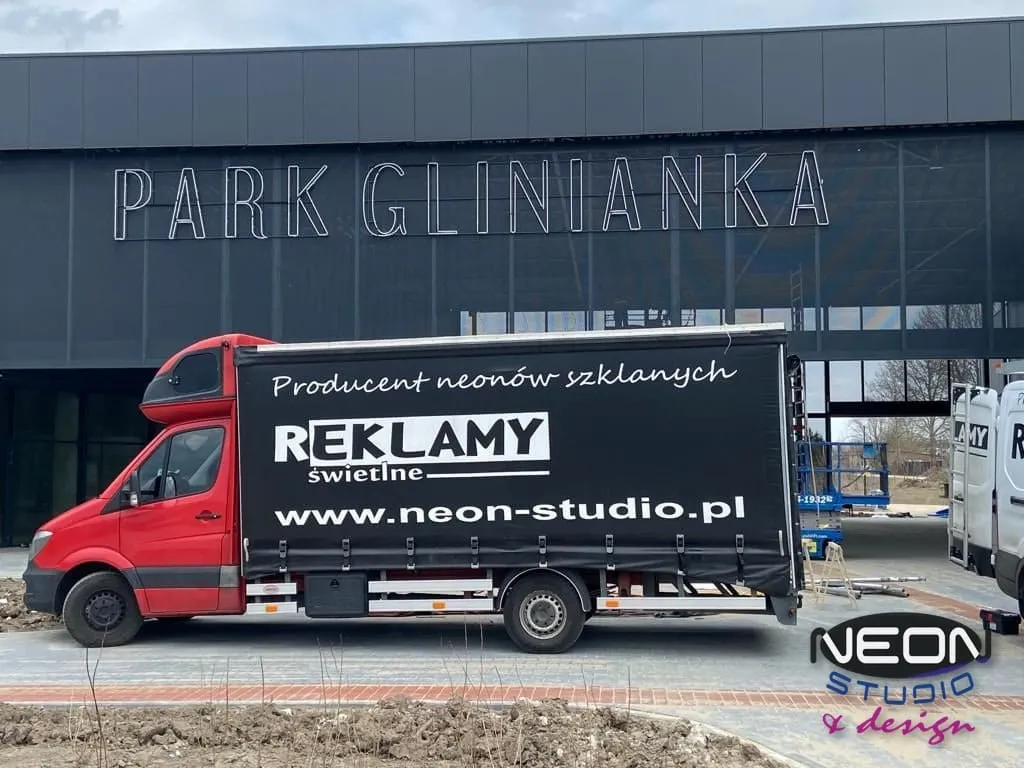
A finished neon is an object made of glass, so transport is a stage in its own right rather than a formality — we deliver projects with our own transport, as with the full set of neons for the Park Glinianka shopping centre.
We carry out the installation ourselves, including electrical connections and work at height, for which we are certified. We also remove previous signage, and once the sign is running we provide servicing and maintenance. In practice that means one contractor from design to a glowing sign, with no passing of responsibility between companies.
How long it takes, and what cannot be rushed
Glass neon is craftsmanship made to a specific order — you do not buy it off a shelf and it is not built in a day. If your deadline is fixed, say so at the very start: it often settles the choice of technology, because on a very short timeline an indoor LED neon can be the more sensible answer.
What actually drives the timeline: the number and complexity of the characters, the overall size, the method of installation, and whether power has already been run to the target location.
- —Send the logo or wording — vector ideally, but a photo will do.
- —Give the width of the wall or window and the mounting height.
- —Check whether power is available at that spot.
- —Mention your deadline at the start, not at the end of the conversation.
A second life for old neons
The same skill that builds a neon from scratch can rescue an old one. We restored 130 glass neons for the Neon Museum in Warsaw and renovated the neons from the Cepelia pavilion — the latter was covered by a television feature, which you can watch in the Media section on the homepage.
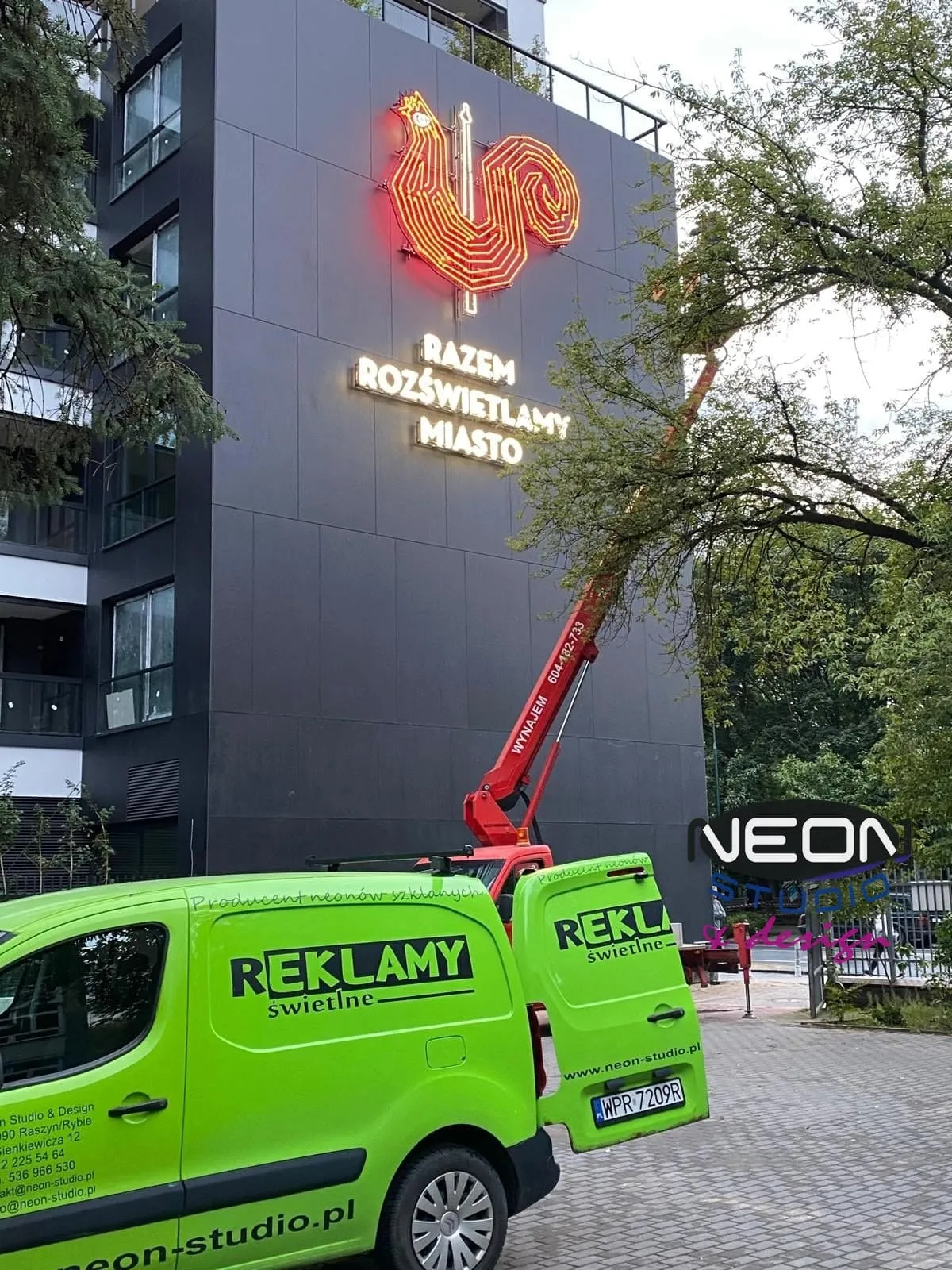
The scale can be entirely different too: for the Lubaszka bakery we built the largest animated glass neon in Poland — 25 by 5 metres, with automation. Our neons also light three stations of the Warsaw metro, Hala Koszyki and the Night Market.
You are welcome in the workshop
Photographs capture glass neon only in part — on a screen the gap between glass and LED looks far smaller than it does in person. So clients hesitating between the technologies, or simply curious about the craft, are welcome at our workshop in Rybie near Raszyn.
We have worked this way since 2000, delivering projects across Poland and Europe. The quote is free — just describe what you need and where it will hang.
Frequently asked questions
- How long does it take to make a glass neon?
- It depends on the number and complexity of the characters, the dimensions and the installation method — every piece is made to a specific order, so we agree the timeline individually. It is not an off-the-shelf product, which is why a fixed deadline is worth mentioning early.
- Do you really manufacture the neons yourselves?
- Yes. We run our own workshop near Warsaw and are one of the few direct manufacturers of traditional glass neon in Europe. Our projects are made entirely in-house, with no subcontractors.
- Can I watch my neon being made?
- Yes — clients who want to see the process are welcome at our workshop in Rybie near Raszyn. It is also the best way to compare glass neon with LED in person, because in photographs the two look more alike than they really are.
- Do you repair and restore old neons?
- Yes. We restored 130 glass neons for the Neon Museum in Warsaw and the neons from the Cepelia pavilion. We also service and maintain the pieces we have built for our clients.
- Why does glass neon cost more than LED?
- Because it is craftsmanship: every tube is bent by hand over a burner and filled with noble gas. In return you get an original product with a depth of glow that cannot be faked, which lasts for years keeping its full colour and works outdoors as well.