Illuminated signage for autumn and winter — what to know
From November a venue spends much of its working hours in the dark. When a sign has to be lit, what survives frost, and why autumn is the right time to order.
From October the sign works longer than the venue
In summer an unlit sign gets away with it: the sun sets after eight and most customers visit in daylight. In autumn that calculation flips within a few weeks. In November and December dusk falls in Warsaw before four in the afternoon — long before a shop, clinic or restaurant closes. Anything that does not glow ceases to exist for a passer-by exactly during the busiest after-work hours.
That is why we treat illumination not as an extra but as the condition for a sign doing its job at all for half the year. A lightbox, illuminated letters or a glass neon then work around the clock — by day as signage, after dark as the only signal that the place is open.
An unlit sign after dark looks like a closed venue
This is the mistake autumn shows most clearly: the venue is open, the lights are on inside, but from the street neither the name nor the trade can be read. A pedestrian walking past after dark sees a dark patch on the facade and walks on — to the neighbour whose lightbox is glowing.
Illumination solves this in the simplest possible way. It is not about effect but about legibility: the name and the trade have to be readable from across the street regardless of the hour. Anything below that line is signage that only works for half the year.
What to choose for the facade — three solutions that glow
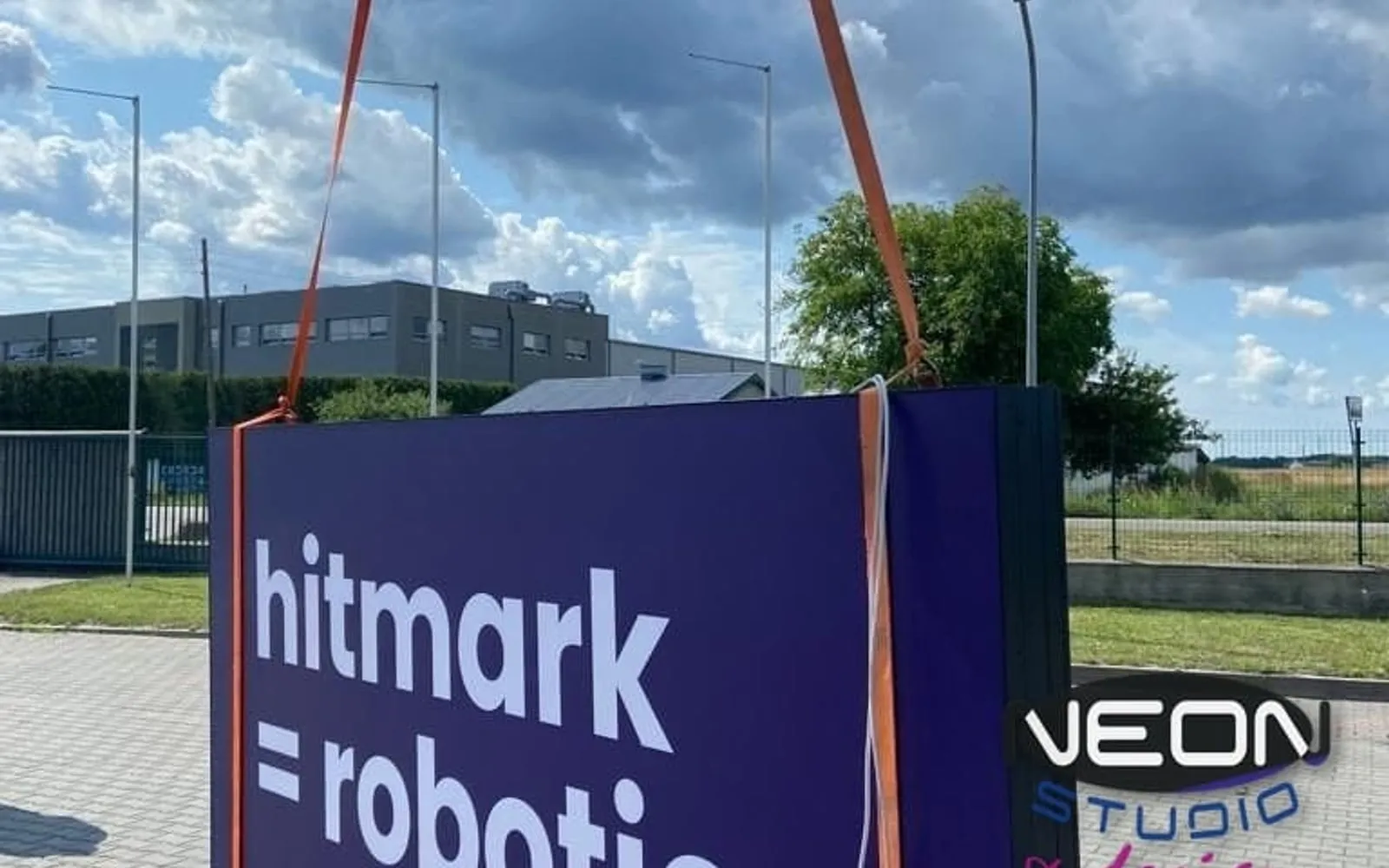
We make three of the most common types of illuminated signage for facades, each with a different strength. An LED-backlit lightbox has a large, uniform glowing surface, so it is legible from a distance and stands out even among other lit signs. 3D letters with front, back (halo) or full illumination keep the facade visible and look more refined. Glass neon gives a deep, vivid glow with a characteristic halo that no other technology reproduces.
The choice depends on what the sign should do after dark: inform from a distance, or build the character of the place. The table below sorts out the differences.
| LED lightbox | Illuminated letters | Glass neon | |
|---|---|---|---|
| Legibility from a distance | Greatest | Good | Good |
| Character | Information | Elegance, halo | Prestige, glow |
| Facade | Covered by the body | Visible | Visible |
| Outdoors | Yes, sealed | Yes, resistant materials | Yes, exceptionally durable |
| Logo and graphics | Yes, on the face | The name alone | Shape and wording |
Rain, frost and road salt — what winter demands of materials
Winter tests signage without mercy. Water gets into every gap, freezes and bursts the housing; salt from the pavement settles on the lower edges; the sun, though low, bleaches cheap plastics all year round. That is why for facades we use only materials resistant to rain, frost and UV, and outdoor lightboxes get seals that protect the body and the electronics inside.
In a supplier's offer photo, an unsealed lightbox and one built for a Polish winter look identical. The difference shows after the first frost. It is one of the questions worth asking with every quote — not only ours.
What not to hang outdoors in autumn: LED neon
LED neon is an imitation of glass neon meant for interiors only — we wrote about it at length in the article on outdoor signage. We repeat it in autumn because that is when the temptation is greatest: the flexible light strip is cheaper and faster to make, so offers “for the facade” are easy to come by.
In autumn the temptation is strongest, because clients want something quick and cheap before the season. If you come across LED neon offered “for facades”, ask about the warranty and how the strip will hold up through winter. Outdoors its role is taken by glass neon, illuminated 3D letters or a lightbox.
Already have a project in mind?
Get a free quoteIllumination and the electricity bill
The illumination of 3D letters and lightboxes is LED-based and very economical — a sign lit for a dozen or more hours a day is not an item that will surprise you on the bill. LED neons for interiors run on low-voltage power and are energy-efficient as well.
What is worth planning from the start is the control: an astronomical timer or a dusk sensor switches the sign on exactly when it starts being needed and off in the morning. It is simple as long as it is thought about at the design stage rather than after installation.
Why autumn is the right time to order
Two arguments, both practical. First: glass neon is craftsmanship made to a specific order — you do not buy it off a shelf and it is not made in a day. 3D letters and lightboxes also need a design, a visualisation, production and installation. Whoever orders in September has a sign for the season in which it matters most.
Second: installation. Work on a facade from a lift or scaffolding is easier and safer before frost and wind arrive. We install ourselves, certified for work at heights and including the electrical connection, but the weather is not on our side in January.
Already have a sign? Inspect it before it starts working for real
If an illuminated sign has been up for a few years, autumn is a good moment to check that every segment lights evenly, the housing does not let water in and the fixings have not loosened over summer. We service and maintain existing illuminated advertising.
A sign with half its letters dark after dusk looks worse than a sign with no illumination at all. That fault tells the customer that nobody here cares about the details.
Our projects worth seeing after dark
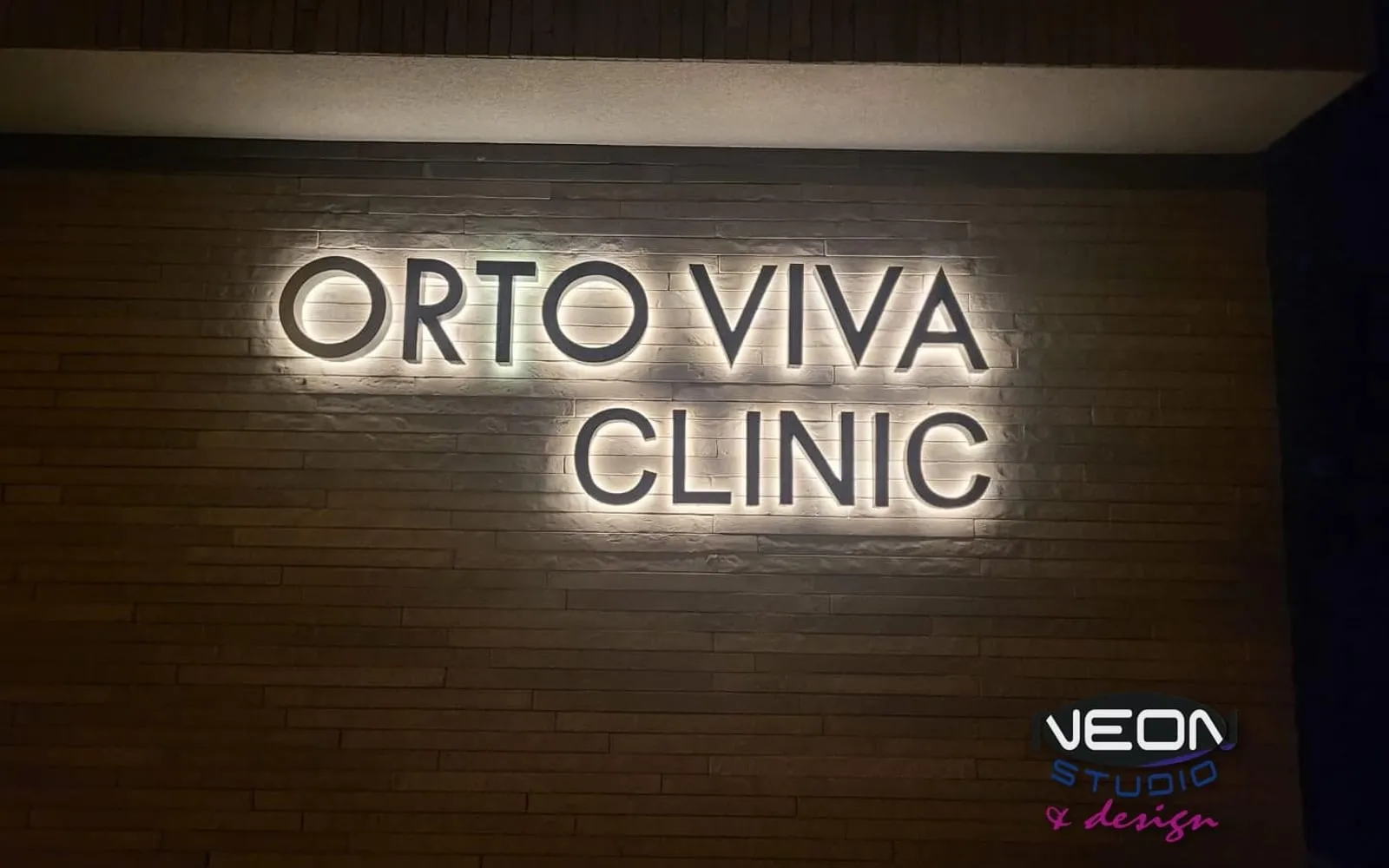
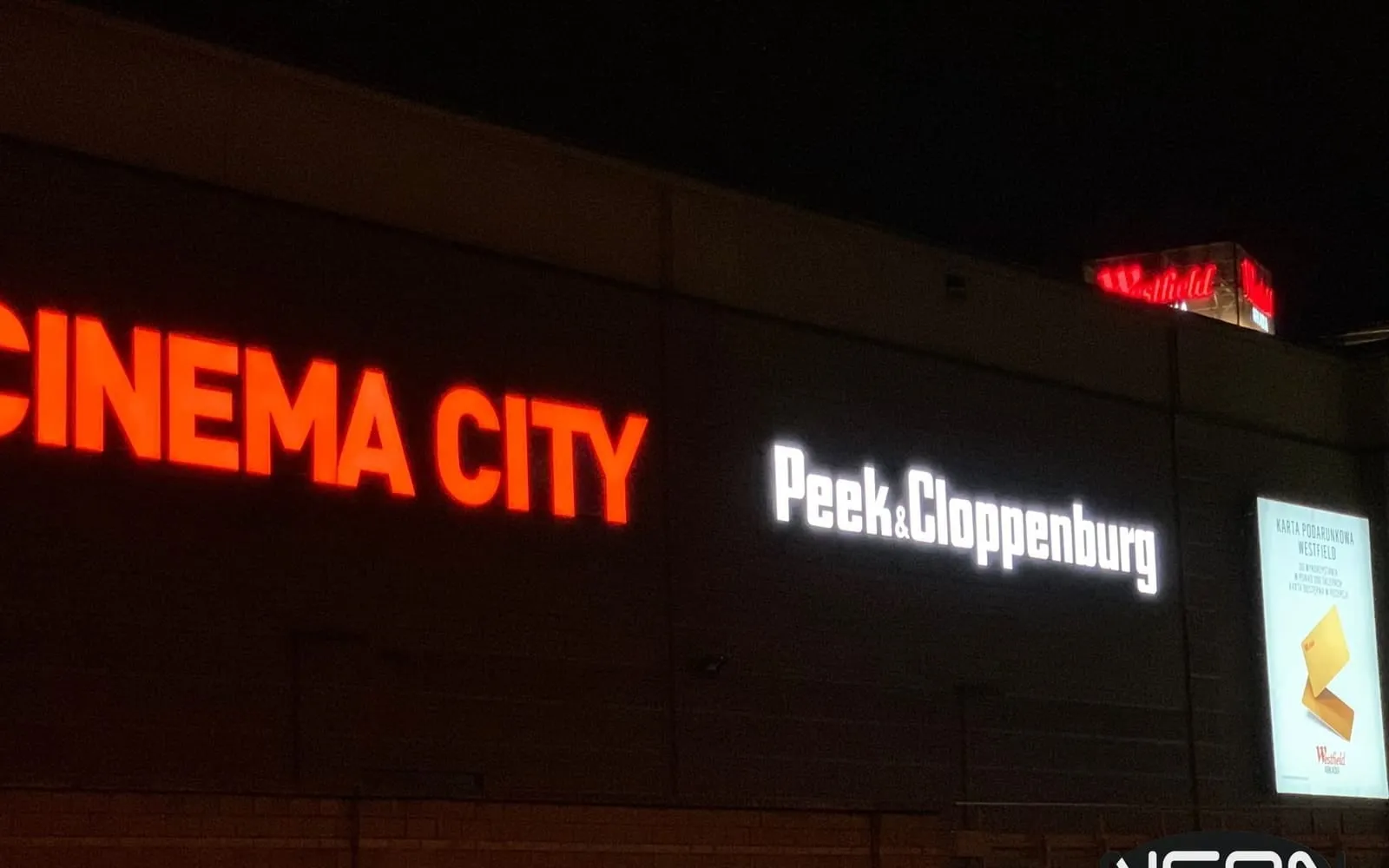
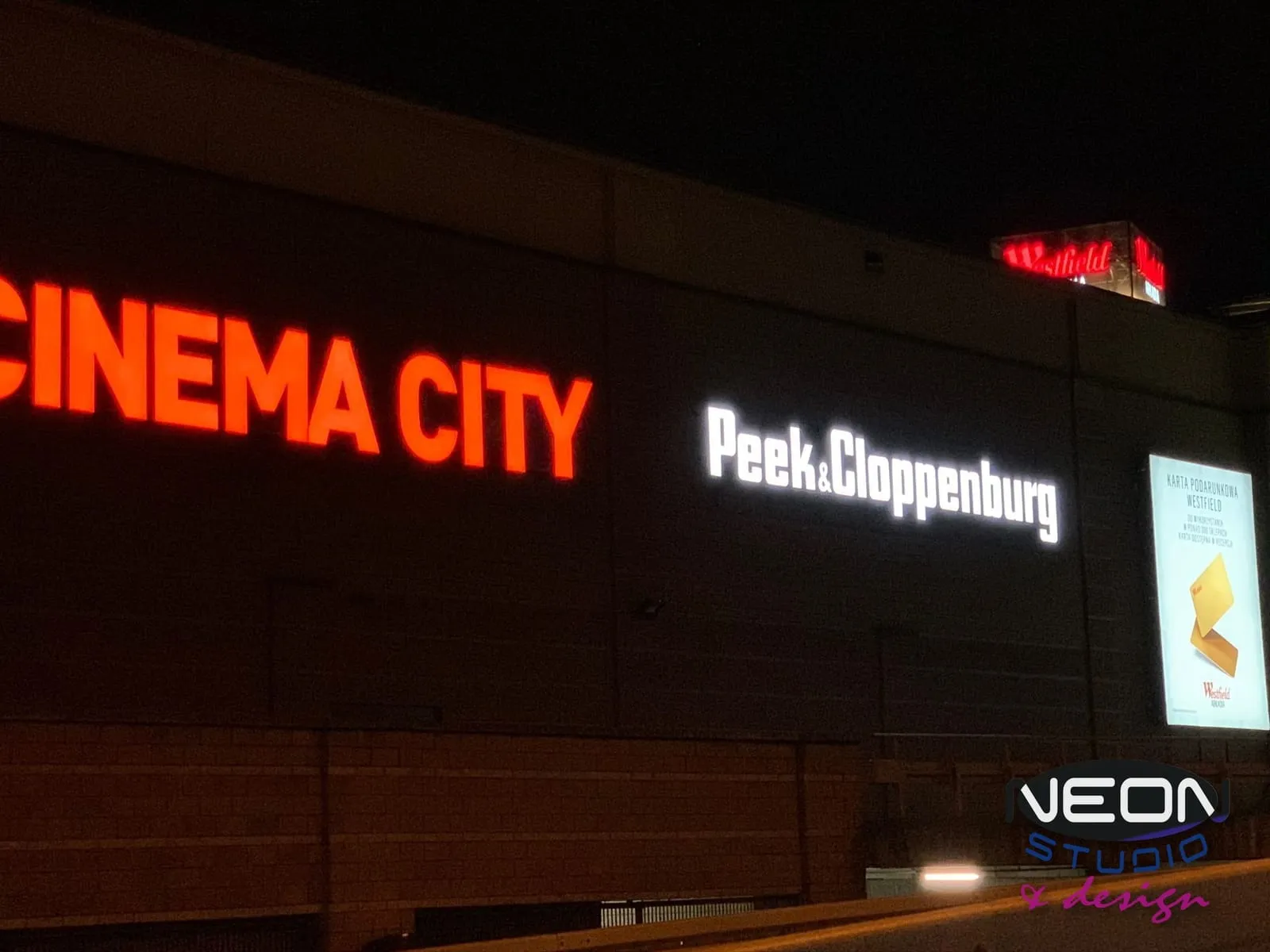
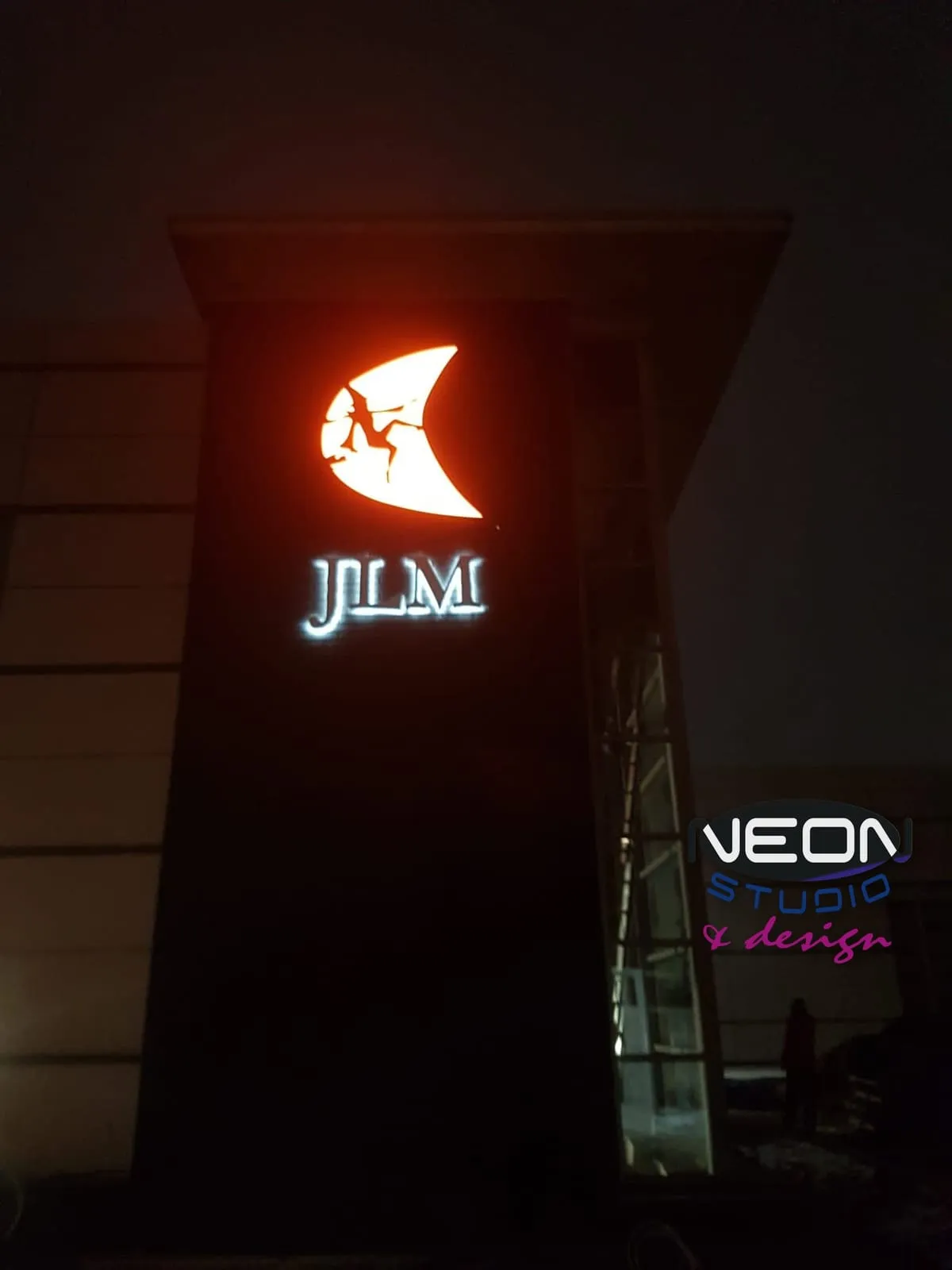
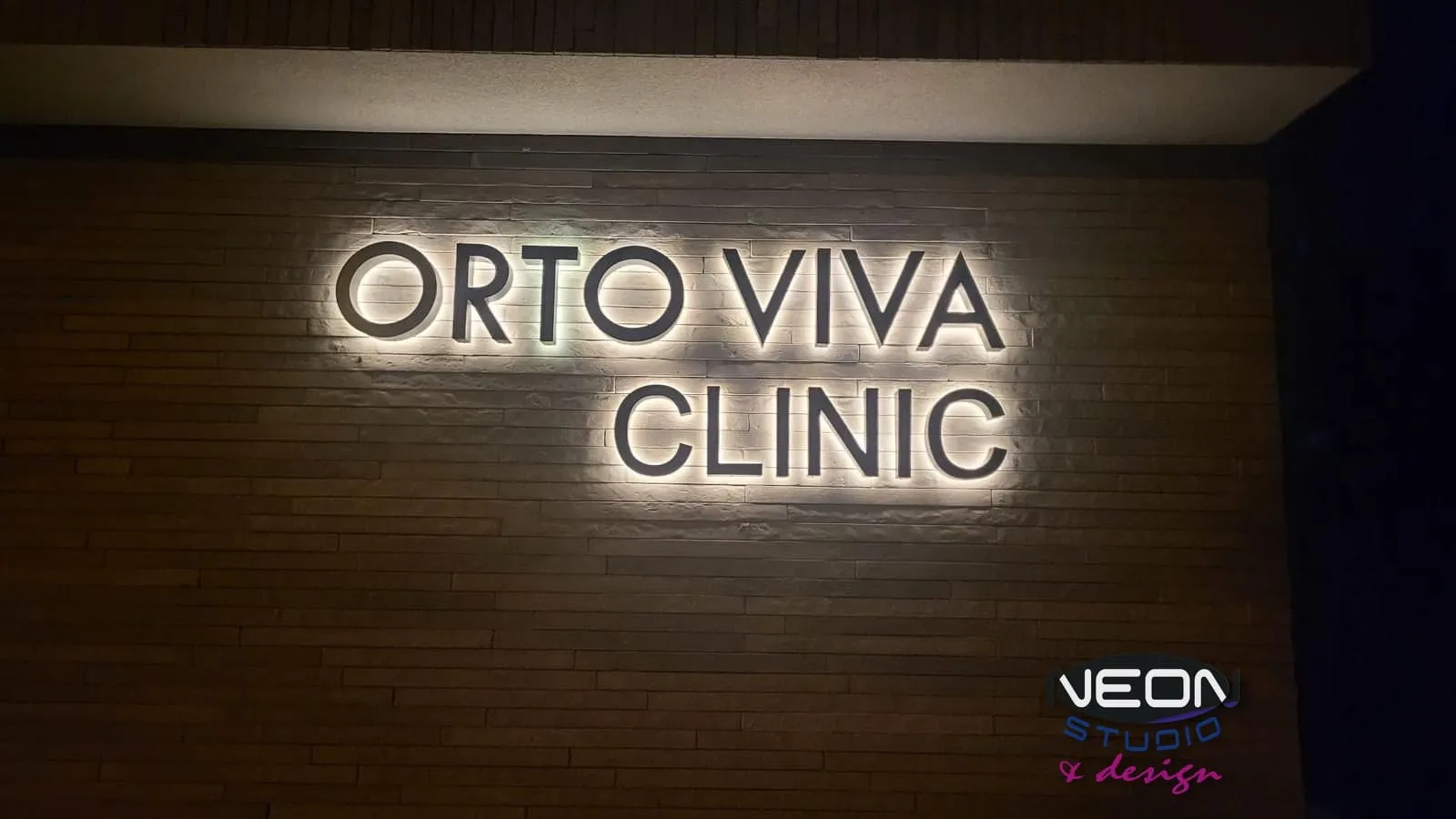
The illuminated 3D letters for Peek & Cloppenburg and Cinema City are legible from a long distance after dark — an example of a solution for a large facade. The JLM lightbox at night shows the opposite effect: a dark body with only the logo and name lit — legible from afar without flooding the facade with light. The halo-lit letters for the Orto Viva clinic work more subtly: the face stays unlit, the glow falls on the wall.
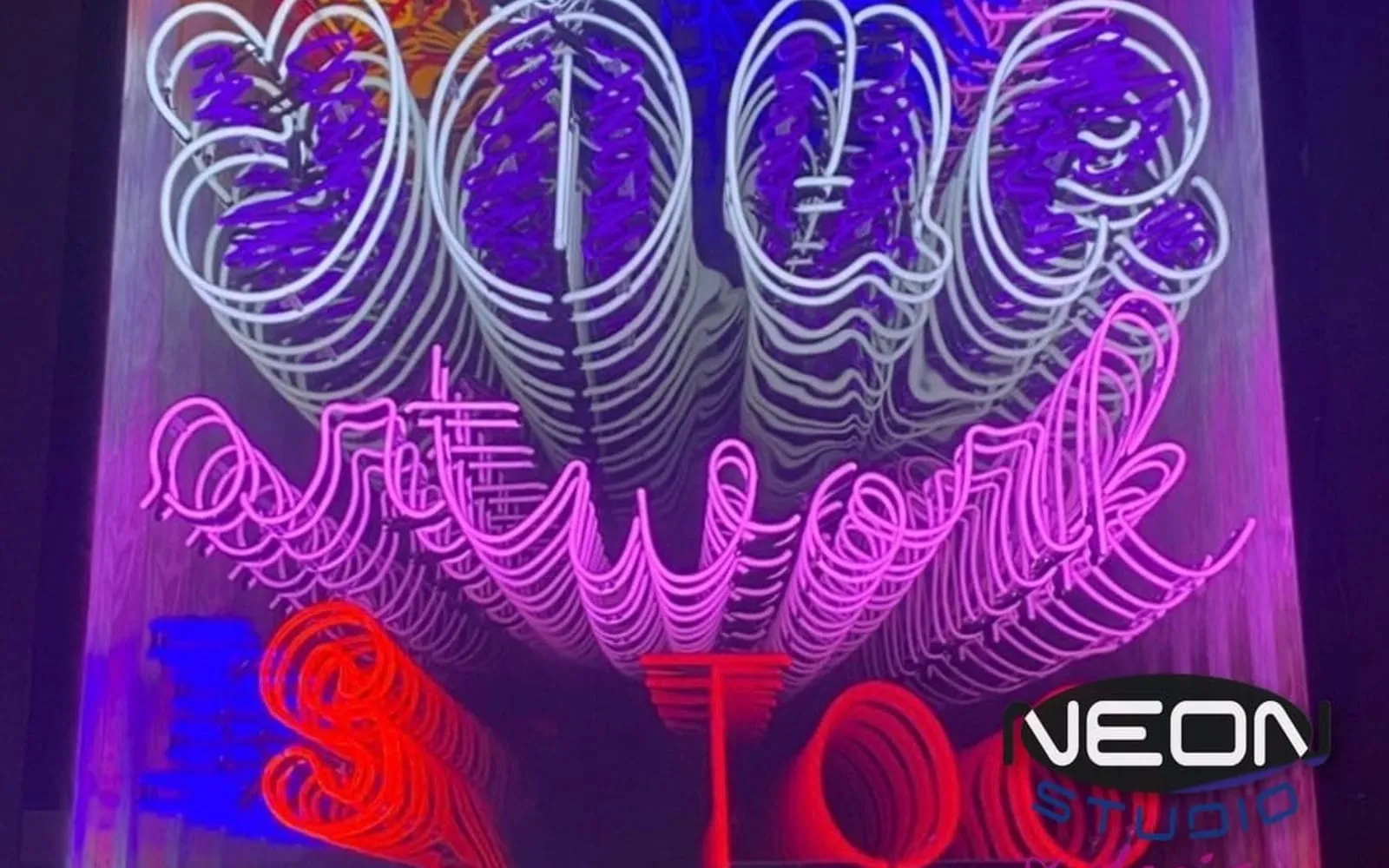
The glass neons for Empik in the former Cepelia building, for Hala Koszyki or at the Warsaw metro stations are examples of signage that becomes the landmark of a place after dark.
What to prepare for a quote before the season
The quote is free and carries no obligation. From your logo or wording we prepare a design and a visualisation before production starts, and the more detail you give upfront, the faster we come back with a specific answer.
- —Your logo or the wording — a vector file ideally, a photo is enough to start.
- —A photo of the facade or window where the sign will hang.
- —The approximate width of the facade and the mounting height.
- —Whether power is already run to that spot.
- —When the sign needs to be lit — even roughly.
Frequently asked questions
- Does a sign have to be illuminated?
- It does not have to, but without illumination it stops working after dark for half the year — and from November dusk falls in Warsaw before four in the afternoon, the busiest after-work hours. Illumination is the condition for signage working all year round.
- Which illuminated sign is most visible from a distance?
- An LED-backlit lightbox, because it has a large, uniform glowing surface. 3D letters and glass neon win on aesthetics and keep the facade visible, but at the same sign height a lightbox is usually noticeable from further away.
- Can LED neon be hung outdoors for the winter?
- We do not recommend it. LED neon is an imitation of glass neon intended for interiors only. For a facade, a sun-exposed window and a garden we recommend glass neon, illuminated 3D letters or a lightbox.
- Is an illuminated sign expensive to run?
- The illumination of letters and lightboxes is LED-based and very economical. It is also worth planning control with an astronomical timer or a dusk sensor, so the sign glows only when it is needed.
- How long does an illuminated sign take to make?
- It depends on the technology, dimensions and installation method — we quote and schedule every project individually. Glass neon is craftsmanship made to order, so a fixed deadline is worth mentioning at the start. Whoever orders in early autumn has the sign for the season.
- Do you repair signs you did not make?
- Yes. We service and maintain existing illuminated advertising. Autumn is a good time for an inspection: checking that all segments light evenly, that the housing keeps water out and that the fixings are secure.